The Flavian Amphitheatre (The Colosseum)
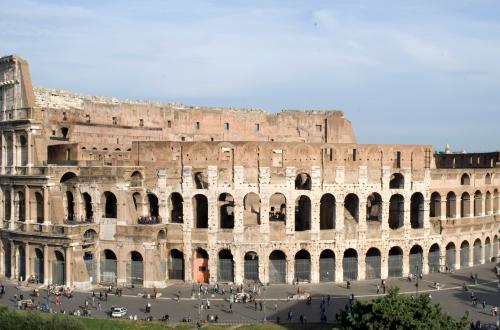
The Flavian Amphitheatre (The Colosseum)
Monuments
 Condividi




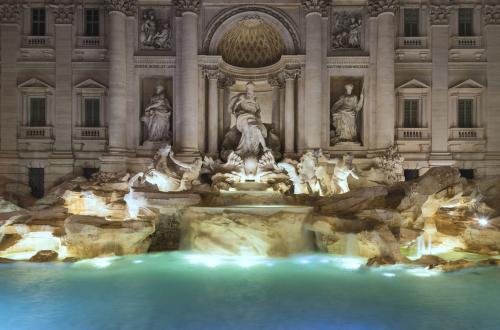
The most famous of the Roman fountains: a jewel of water and stone
According to legend, the history of Rome begins right here

An unmissable opportunity to plan your own future in the field of Fashion
Rome is a perfect destination for tourism and in particular for school trips

The inestimable artistic heritage of Rome is the preferred destination for the many students who decide to benefit from the many cultural opportunities that the city offers
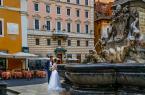
Rome is the perfect choice for a romantic and refined wedding, enriched by a millenary history

Tradition, sartorial mastery, and innovative technologies in a unique setting

Glamour, myth and beauty: a city where even fashion is a legend
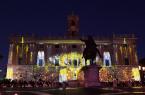
Beauty and art, magnificent spectators of a thousand-year history
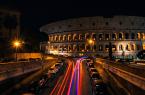
The endless opportunities for fun in Rome

Rome is the ideal destination for Tourism Business
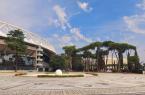
How and where to see live sporting events

How and where to train body and mind in the second greenest capital of Europe
History, fascinating facts, and useful information to fully experience the magic of the Eternal City

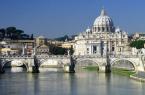

Seven unusual itineraries to discover the city from new perspectives
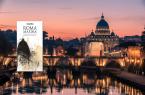
Stories, places, and secrets – a guidebook to an eternal city.

A puzzle of voices and experiences: bloggers explain Rome

A great wealth of knowledge and experience accumulated in the past
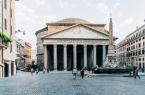
Wealth, splendor and magnificence immersed in the magic of history
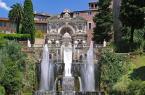
Discover the amazing city and its magnificent villas


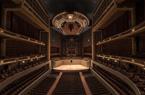


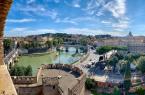
An itinerary between millenary architectures and daring contemporary visions
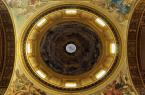
Rome, the ideal setting for cinema masterpieces and great melodies
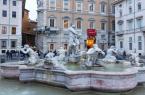
A trip inside the museums between Piazza Navona and its surroundings

An exciting itinerary for visitors with only a short time to discover the city’s main attractions

Three intense days to experience the unmissable attractions of Rome
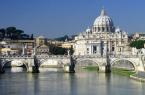
A perfect five day itinerary for an unforgettable Roman holiday
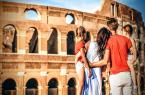
Indoor & outdoor activities and attractions
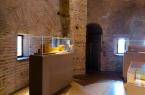
Discovering precious collections from prehistory to contemporary art

Simple and delicious traditional recipes

Typical sweets of the Roman Castles of very ancient origin

The marine soul of Rome
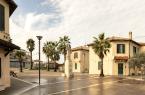
Flavours and ancient traditions in a place where time seems to have stopped
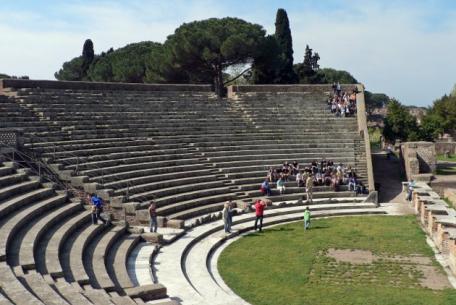
In your experience in the territory of Ostia you cannot miss to visit the Parco Archeologico di Ostia Antica, one of the largest archeological sites of ancient Rome.

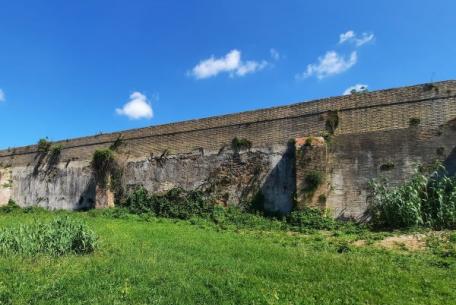
The remains of the ancient Etruscan city of Veii are located near the village of Isola Farnese on a triangular-shaped plateau lapped by two rivers, the Fos
[...]
Located in the Pietralata neighborhood in the northeast quadrant of the city, the park owes its name to the ol
[...]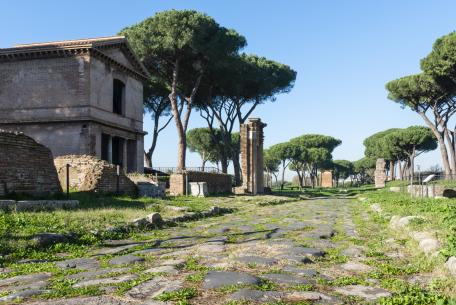
The Park of the Tombs of Via Latina is one of the most important funerary complexes in the suburb of Rome, which still preserves the traditional appearance of the ancient Roman cou
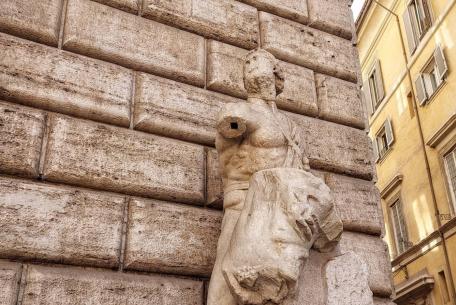
[...]
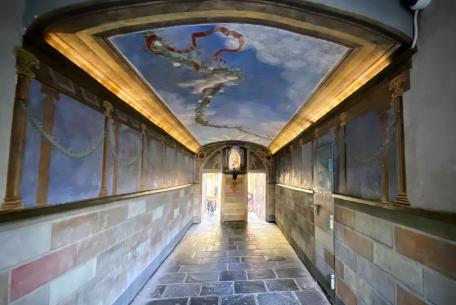
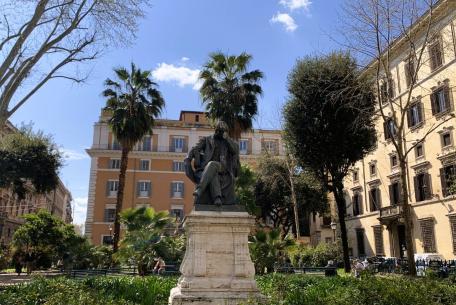
Benedetto Cairoli Square is dedicated to Benedetto Cairoli (1825-1889), a great fighter in the Five Days of Milan, but also at Custoza, Varese, Calatafimi, Mentana and Giuseppe Garibaldi's aide in
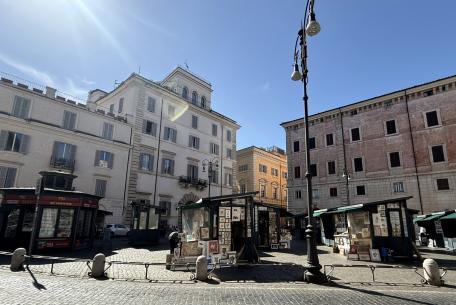
[...]
Piazza Borghese is one of the squares in the historic centre of Rome, in the Campo Marzio district.
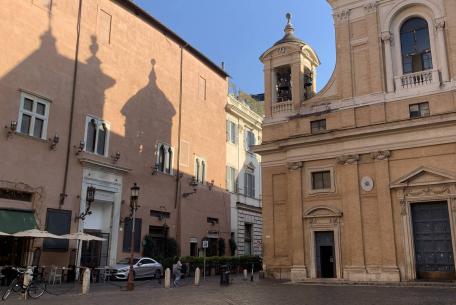
Piazza Capranica, situata nel cuore del Rione Colonna, ospita l'antica Chiesa di Santa Maria in Aqu
[...]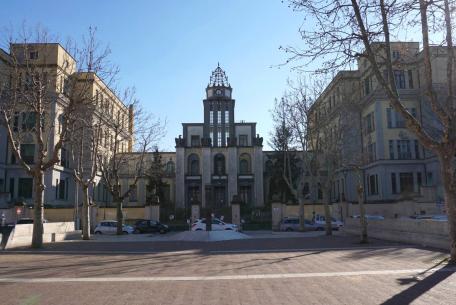
Piazza dalla pianta rettangolare, nel caratteristico quartiere della Garbatella.
Foto Turismo Roma
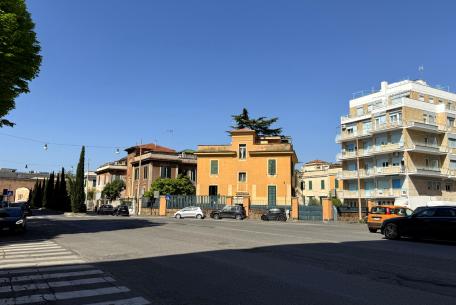
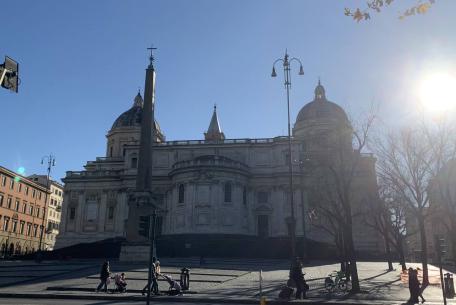
In the middle of piazza dell'Esquilino, one of the seven hills, an obelisk stands out. Like its twin in Piazza del Quirinale, it decorated the entrance of the Mausoleum of Augustus.
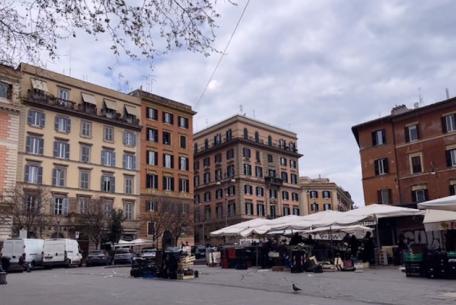
The square takes its name from the Church of San Cosimato, dating back to the 10th c
[...]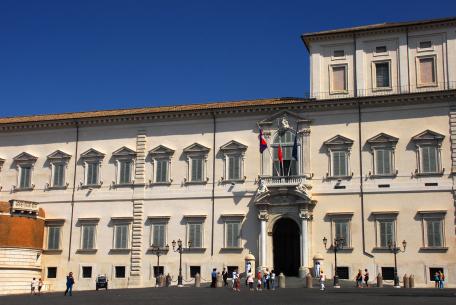
Under the watchful eye of the imposing Corazzieri stands, on the highest of the seven hills of Rome, the Palazzo del Quirinale which, since 1946, has been the symbolic place of the
[...]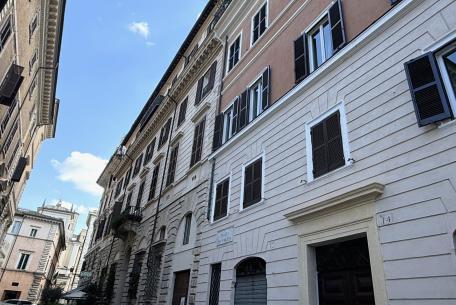
Piccola e suggestiva piazza nel centro storico di Roma vicino via dei Coronari e piazza Navona.
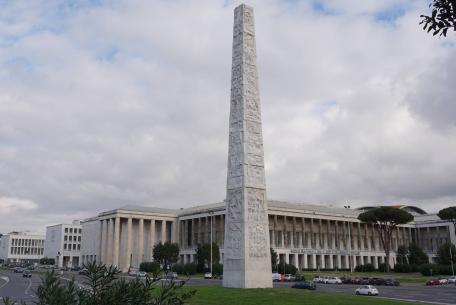
It was designed by Francesco Fariello, Saverio Muratori, Ludovico Quaroni and Luigi Moretti, and features the 45-metre Stele to Guglielmo Marconi in the centre, celebrating the invention of the rad
[...]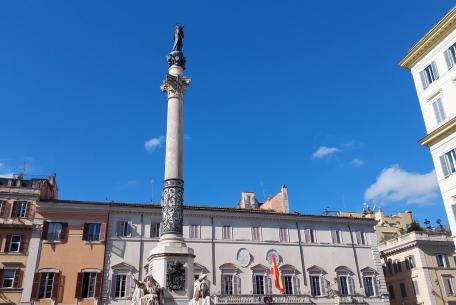
Al centro della piazza, situata a pochi passi dalla Scalinata di Trinità dei Monti
[...]
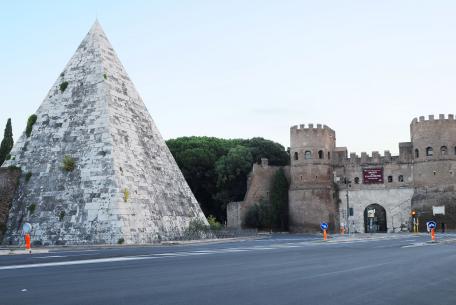
After the conquest of Egypt in 31 BC on the part of Ottaviano Augusto, following Cleopatra's death, Roman funeral construction began to be inspired by Egyptian models
[...]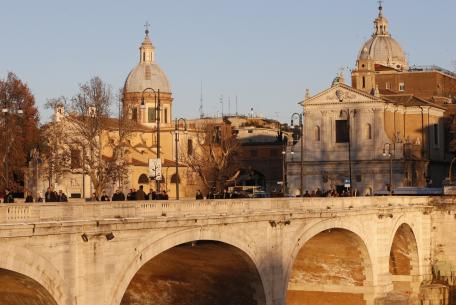
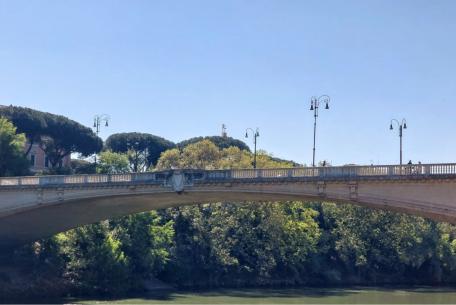
Ponte del Risorgimento is a bridge connecting Piazzale delle Belle Arti with Piazza Monte Grappa in Rome's Flaminio and Della Vittoria districts.
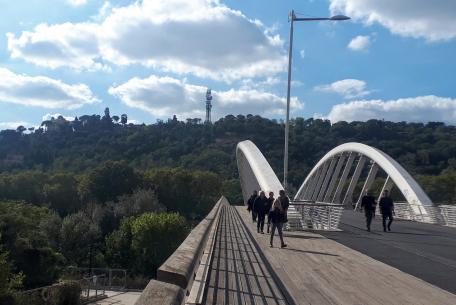
Designed in 1999, the bridge connects Piazza Gentile da Fabriano, in the Flaminio district, with the Lungotevere Cadorna at the Foro Italico swimming stadium in the Delle Vittorie district. Constru
[...]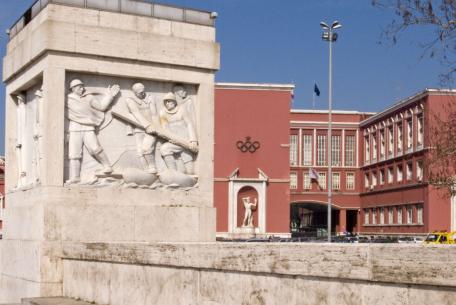
The 1927 project of the Foro Mussolini, today Foro Italico, work of the architect Enrico Del
[...]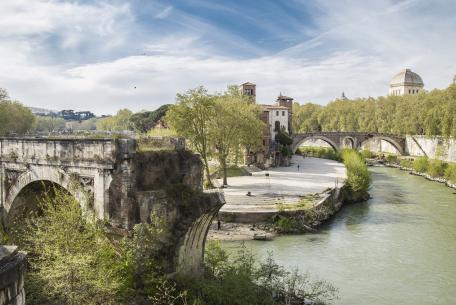
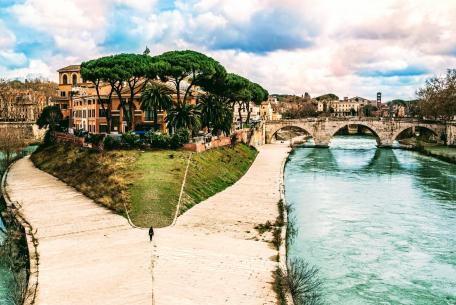
It is commonly known as Ponte Rotto (Broken Bridge) but the great arch with a decadent and poetic aspect that emerges from the waters of the Tiber, not far from the Tiber Island, is actually what r
[...]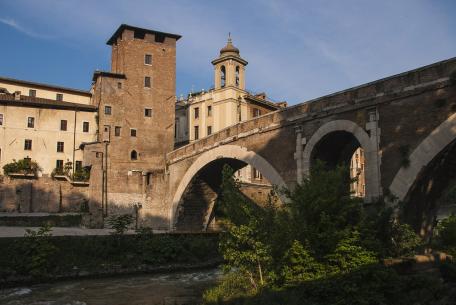
It is the best preserved Roman bridge and, together with the Milvian Bridge
[...]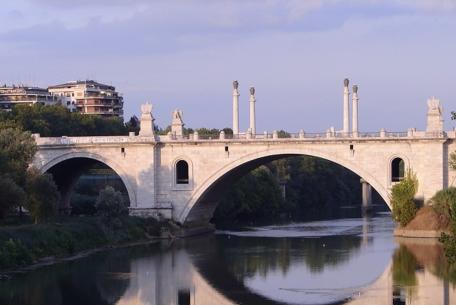
The need to cope with the increasing amount of traffic coming from the north, along the Via Cassia and Via Flaminia consular roads, as a result of the increased number of cars circulating in Rome,
[...]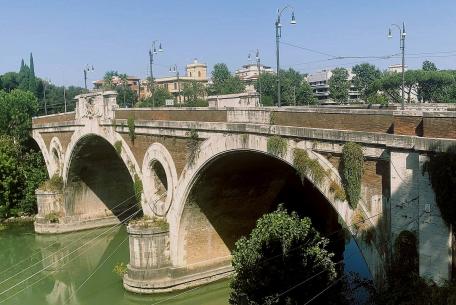
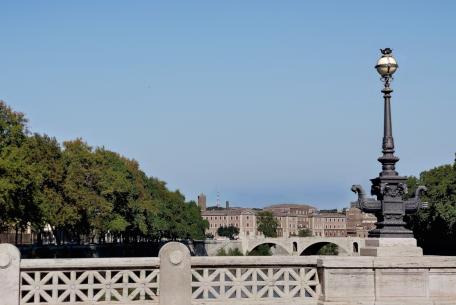
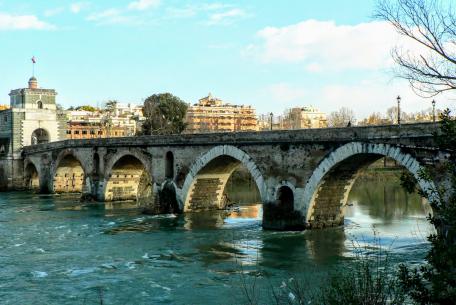
Located in the northern quadrant of the city, Ponte Milvio is one of the most ancient and beautiful bridges in Rome, a meeting place for young Romans and tourists,
[...]
Condividi
 Condividi
 Condividi
 Condividi
 Condividi
 Condividi
 Condividi