

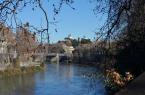


















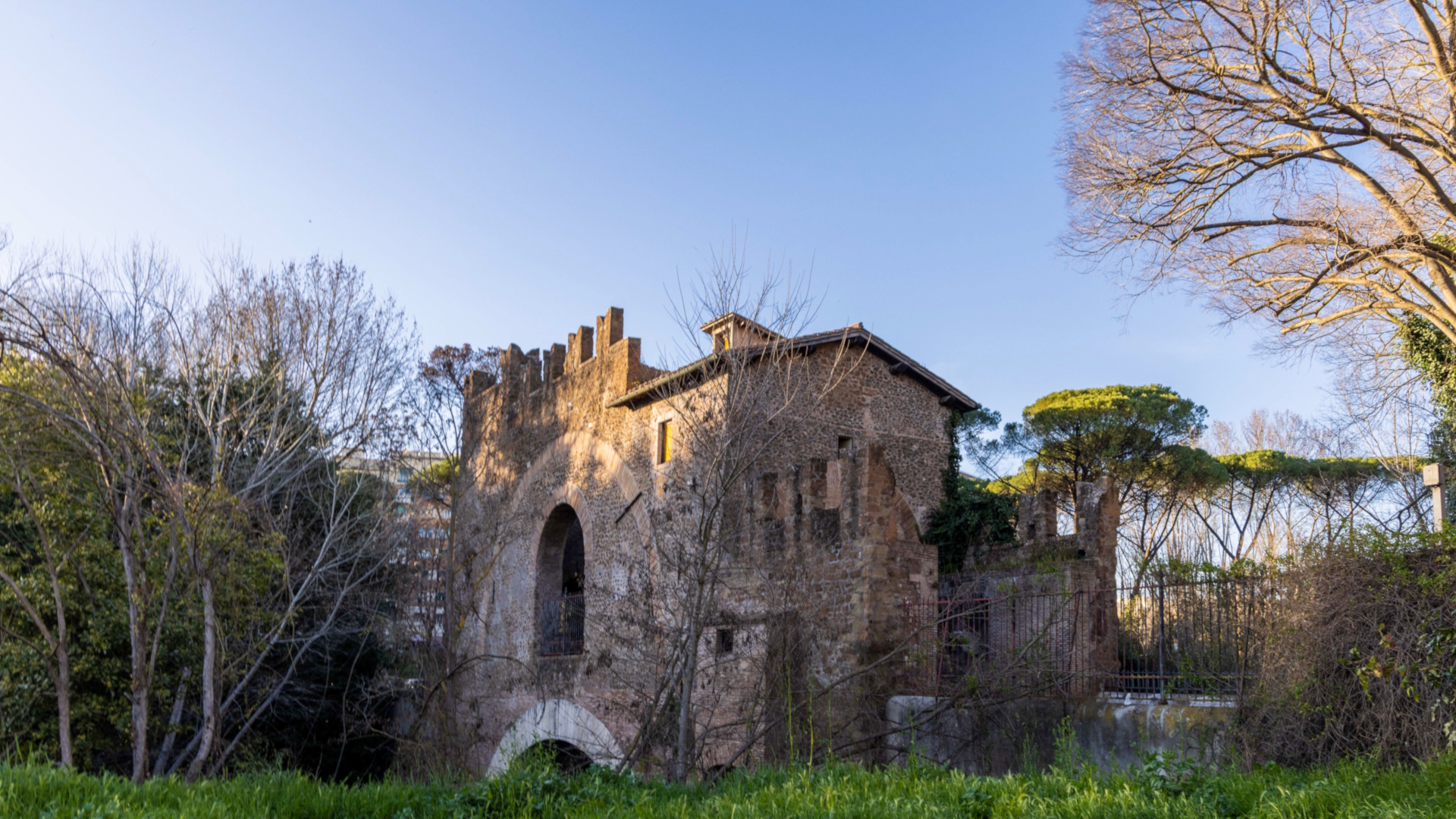
The Bridge was erected at the point where the via Nomentana crossed the Aniene river at the foot of the Monte Sacro hill, a place crossed by the passage of transhumant herds since ancient times. Today is a large travertine arch, surmounted by a medieval crenellated fortification, and two lateral ramp arches on each side.
Studies have shown that its construction can be dated to between the late 2nd and early 1st centuries BC based on the materials used. Originally, the bridge spanned the River Aniene with a double arch, of which only the one on the Monte Sacro side remains. Destroyed and restored several times over the centuries, it is characterized by a variety of materials and construction techniques spanning a broad chronological period, from antiquity through the medieval to the modern era. The structure has undergone major reconstruction work. The side arches, built in mortar using salvaged materials (marble, brick, flint and tuff blocks), date from the 8th century; the crenellated castle-like structure, on the other hand, dates from the works carried out in the mid-15th century under Pope Nicholas V: his name and coat of arms are preserved on the entrance façade on the downstream side. The Pope had ordered its restoration following the damage sustained during the Gothic and Byzantine periods. Today, only one of the crenellated towers remains; these were intended to house the guard posts on the downstream side and protected the access gates to the bridge.
The tradition wants that on this bridge Pope Leo III met Charlemagne, who came to Rome to be crowned emperor of the Holy Roman Empire, in 800 AD. Furthermore, the rebellion of the plebs (345 BC) took place close to the Nomentano Bridge near Monte Sacro hill, quelled by the famous apologue of Menenio Agrippa and by the concession of the Tribunate.
In September 2026, the historic wooden pedestrian walkway was restored between the two masonry towers at the top of the bridge, in keeping with the structure’s historical and architectural characteristics.
The Basilica of Sant'Agnese outside the Walls and the Mausoleum of Santa Costanza
 Condividi
Villa Borghese
 Condividi
Villa Ada Savoia
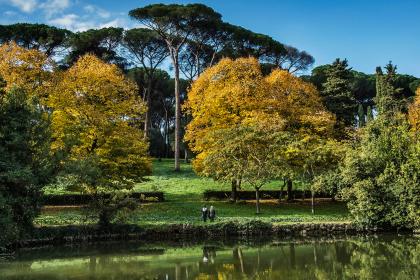 Condividi
Information
Visible from outside
Condividi
Location
To find out about all accessibility services, visit the Rome accessible section.