



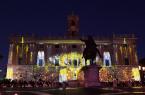








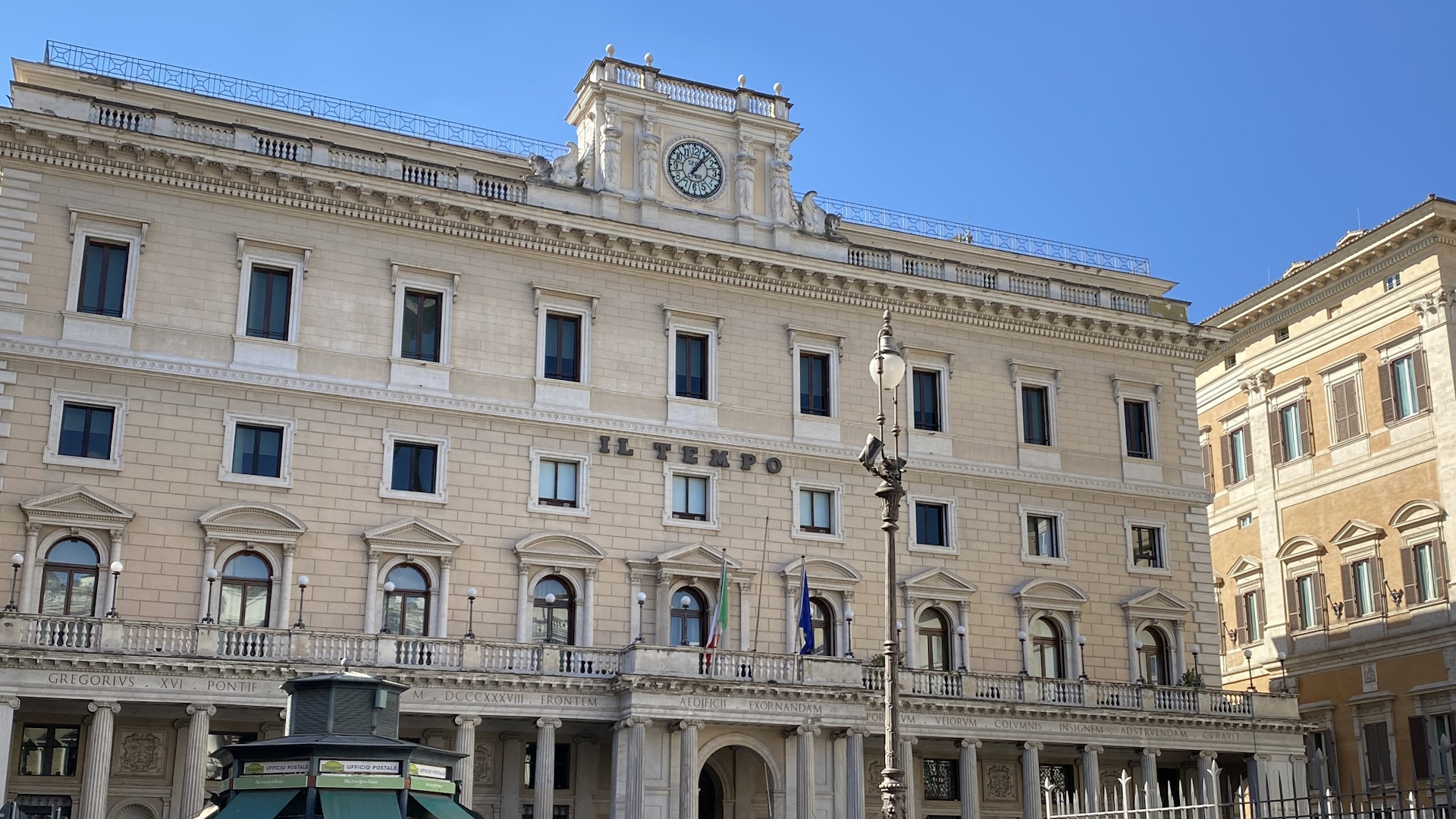
This elegant building overlooking the square dominated by the Column of Marcus Aurelius is also known as the “Palazzo del Tempo”, as it was for many years the headquarters of the Roman newspaper “Il Tempo”. It was first built in the second half of the 17th century but took on its current appearance following 19th-century restoration work by Pietro Camporese and Giovanni Battista Giovenale, commissioned first by Pope Gregory XVI and then by the Wedekind family.
By Pietro Camporese is one of the building’s most historically significant features: a portico comprising sixteen columns, twelve of which were recovered from archaeological excavations in the Etruscan city of Veii, as recorded in the Latin inscription on the frieze. Used as the headquarters of the Pope’s State Post Office and then, for a few years, as the Ministry of Education of the Kingdom of Italy, the building was purchased in 1879 by the wealthy banker Karl Wedekind, who oversaw its renovation, embellishing the interiors with exquisite stucco work and mosaics to transform it into a luxurious residence. The building passed into the ownership of the National Social Security Institute - INPS (then the National Social Insurance Fund) in 1925. For a short period (from 1943 until the liberation of Rome), it also served as the official headquarters of the Fascist Party, before housing the printing presses and editorial offices of the daily newspaper “Il Tempo” in the post-war period.
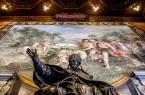
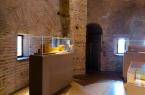
Now back in the possession of the INPS, which accommodates the offices of its Directorate-General, the building features two imposing halls: the “Sala Angiolillo”, with its decorated Renaissance-inspired ceilings and mosaic floors designed by the architect Giovenale in 1881, and the “Sala Montecitorio”, featuring a giant 17th-century tapestry from the Sciarra Collection. The building also houses a significant collection of 20th-century artworks, comprising around ninety pieces, including paintings, bronzes, bas-reliefs, ceramics and portraits.
Information
 Condividi
Location
To find out about all accessibility services, visit the Rome accessible section.