


























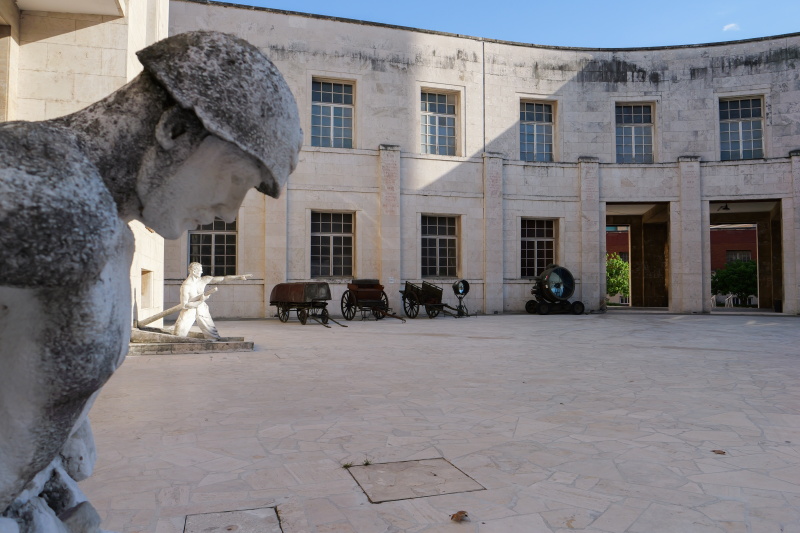
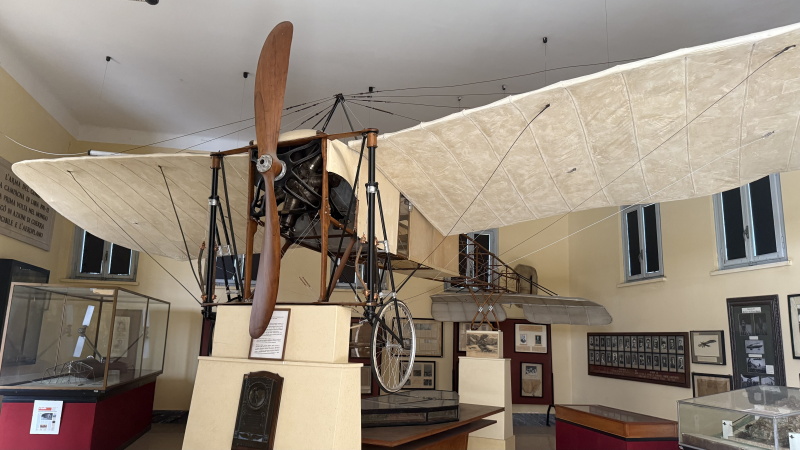
Located among the refined Umbertine and Liberty-style architecture of the Vittoria district – an expression of post-unification modern Rome – the Museum of the Engineer Corps will open to the public on a permanent basis for the first time on 31 October 2025.
A witness to the deep connection between civil society and military engineering in the fields of engineering and architecture, the museum is being transformed—thanks to Difesa Servizi, on behalf of the Ministry of Defence and the Armed Forces – into a new cultural destination for Rome.
The name Museo del Genio was chosen to make immediately accessible the identity of a place that is much more than a museum, while its full title, Historical and Cultural Institute of the Engineer Corps (ISCAG) of the Italian Army, reveals its unique nature: a centre where museum, specialist library, historical and photographic archive, and a place for study, research and remembrance all coexist.
A new cultural space, therefore, and a place that narrates intelligence as a transformative force: from engineering to communications, from flight to the future.
The history of the Museum
Founded in the early twentieth century as the Museum of Italian Military Engineering, the current Historical and Cultural Institute of the Engineer Corps – today widely known as the Museo del Genio – emerged during a decisive phase of national history. It was a time when the newly unified Italy sought symbols, references and narratives capable of shaping a shared identity. In this context, celebrating the excellence of military engineering and architecture – fields in which Italy has long excelled through ingenuity and vision – meant recounting a country racing towards modernity.
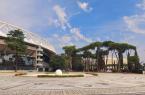
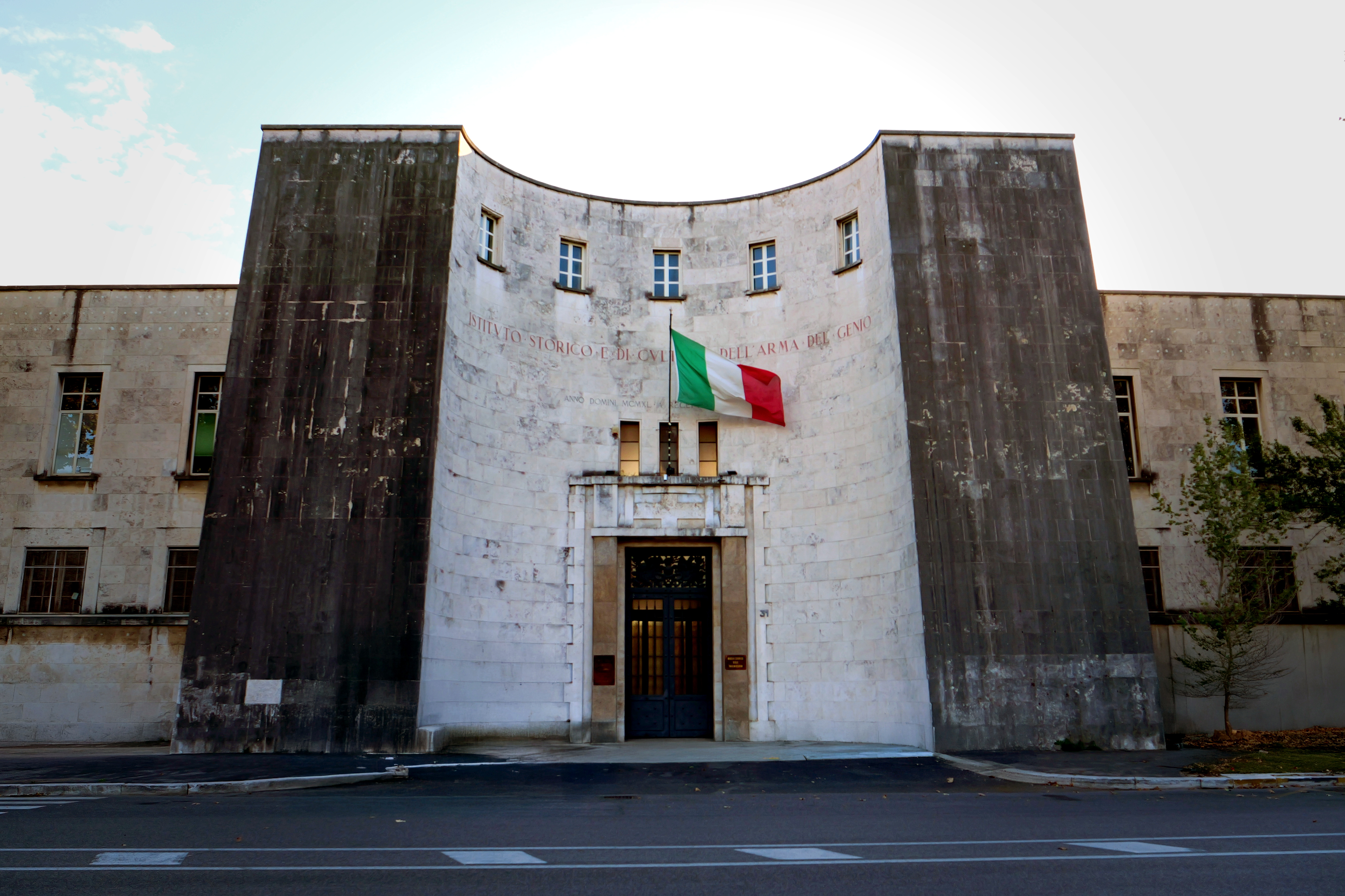
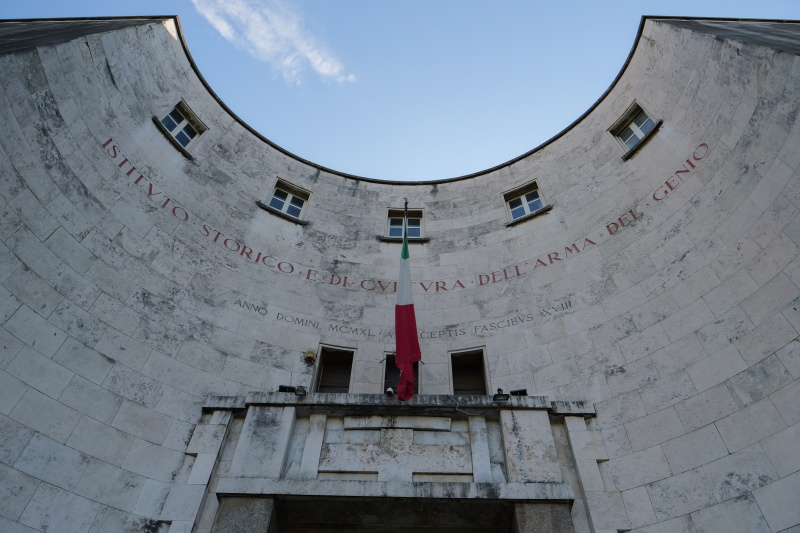
The imposing monumental complex was designed by Engineer Corps Lieutenant Colonel Gennaro De Matteis and built between 1936 and 1939. It represents one of the high points of twentieth-century institutional architecture. Rationalism and simplified Neoclassicism merge in an elegant balance, enhanced by quintessentially Italian materials – travertine and brick – and by scenographic elements such as the vast entrance exedra and the powerful towers evoking the idea of a fortified citadel.
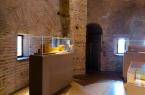
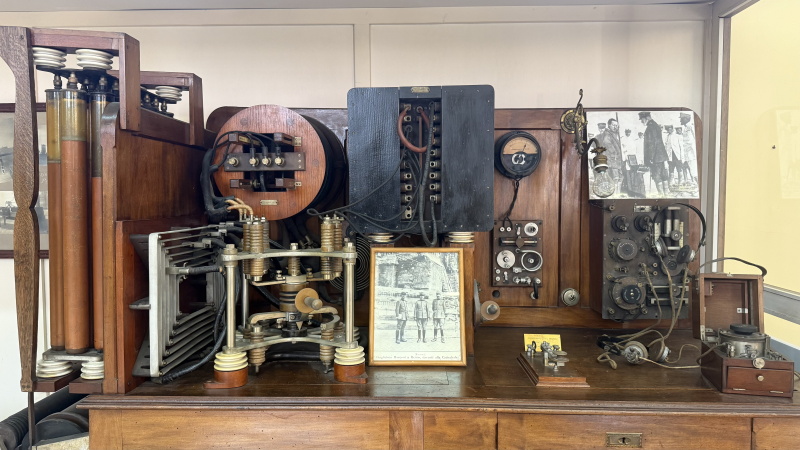
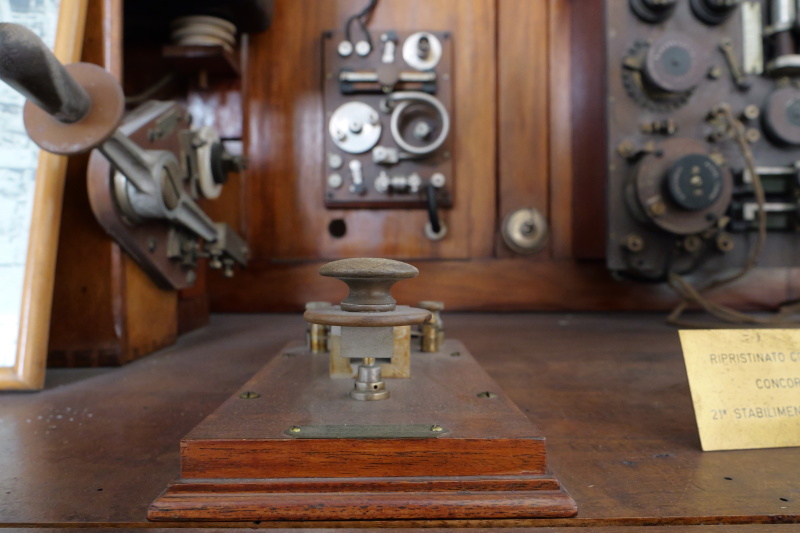
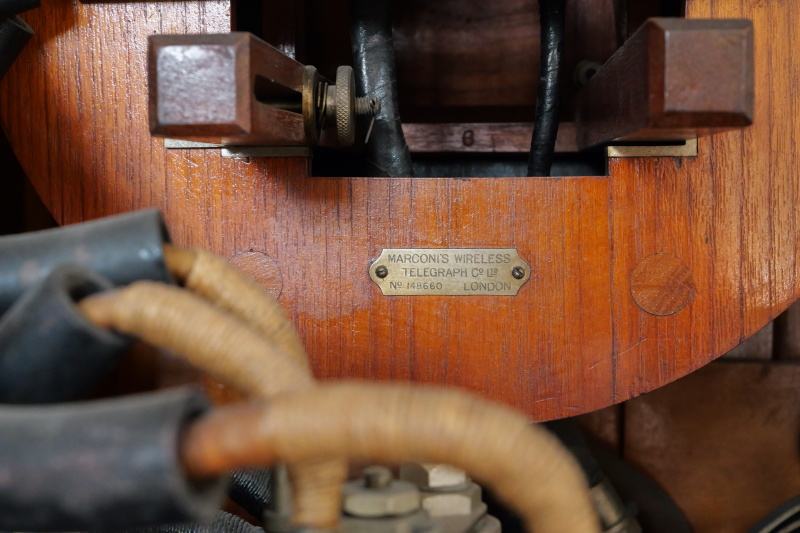
Inside, the Museum preserves a heritage of exceptional historical, technical and documentary value, bringing to life the extraordinary story of human communication and ingenuity: from ancient visual signalling to the use of carrier pigeons; from sophisticated optical instruments to the telegraph; up to the revolution of radio by Guglielmo Marconi – an Engineer Corps captain – whose pioneering equipment forever transformed the world of communications, and including one of the earliest telephones designed by Antonio Meucci, displayed alongside its more advanced descendants: field telephones, military switchboards and devices that shaped the history of telecommunications.
But the journey does not end here: scale models of Italian cities, bridge prototypes, instruments and equipment from the various Engineer Corps specialities – Pioneers, Pontoon Engineers, Sappers and Railway Engineers – recount the ability to combine technical knowledge with operational creativity. Alongside this stands an impressive documentary heritage of more than 24,000 volumes, 30,000 historical photographs, 20,000 iconographic items and over 150,000 documents spanning centuries of Italy’s military, scientific and technological history.
Visiting the Museum
The Museum unfolds across three main sections, each conceived as a stage in a journey into the heart of Italian military ingenuity.
The Hall of the Colonies and Military Architecture
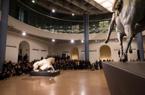
This hall transports visitors into a world of exploration, engineering feats and fortifications built in often extreme contexts. The scale models and reconstructions illustrate the creativity and precision with which the Engineer Corps designed and built defensive works. Among them stands out the “Spaccamela” modular sheet-metal fort: a small masterpiece of modular architecture, designed for rapid assembly and adaptation to the needs of the moment.
The Hall of Photography, Communications and Searchlights
Here, technology reveals itself in its most striking form. The objects on display—often large, complex and almost theatrical—tell a story of intuition and solutions developed to meet vital needs: to communicate, illuminate and transmit information. It is fascinating to discover how these once bulky and sophisticated instruments gradually became more compact over time, ultimately evolving into the functions we now control with a simple touch on a smartphone screen. This hall showcases a distinctively Italian quality: the ability to combine utility with beauty, functionality with aesthetic care.
The Hall of Aviation and Railway Engineers
This section is devoted to the origins of the Italian Air Force, which was born precisely as a speciality of the Engineer Corps. Among models, instruments and original artefacts, the story of the first adventures in the sky takes shape: from pioneering attempts at flight to the innovations that would lead Italy to develop one of the most advanced armed forces in Europe. Alongside this, a dedicated display on the Railway Engineers traces the evolution of a unit that succeeded in transforming railway technology into a strategic tool for logistics and mobility.
The visit continues through other spaces showcasing materials, tools and equipment used by the Engineer Railway Regiment: an outstanding component of the Italian Army, guardian of unique expertise within the national landscape.
Museo del Genio Ph. Lucky's Productions
Information
Si comunica che l'area museale dell'Istituto è chiusa per lavori di restauro e ristrutturazione.La Biblioteca e l'Archivio documentale sono invece consultabili e fruibili previa richiesta delle relative autorizzazioni.Le sale sono visitabili nei giorni di martedi, giovedi e sabato dalle ore 09.30 alle 12.30.L'Archivio storico e la Biblioteca sono aperti nei giorni di martedi, mercoledi e giovedi, dalle ore 08.45 alle 11.45 e dalle 13.15 alle 15.15. Per le visite in giorni od orari diversi, è necessario prendere accordi con la Direzione dell'Istituto (tel. 06.3725446).
Per la sola fruizione su prenotazione del materiale d'Archivio e ricerca storica (dal lunedì al venerdì) scrivere al seguente indirizzo email: archivio.iscag@comgenio.esercito.difesa.it
 Condividi
Location
To find out about all accessibility services, visit the Rome accessible section.