































The fountain, inserted into the parapet of the wall of the Lungotevere Testaccio, was built according to a design by the architect Antonio Muñoz (1884-1960) in the years 1939-1940 with the aim of creating a backdrop for the facing road.
To this end, the plaque and coat of arms that had faced the river since 1869 - to commemorate the excavation campaigns commissioned by Pope Pius IX and conducted in the area by archaeologist Pietro Ercole Visconti - were moved and inserted into the parapet of the wall, aligned with Via Florio, connecting a 3rd century AD sarcophagus with newly created elements.
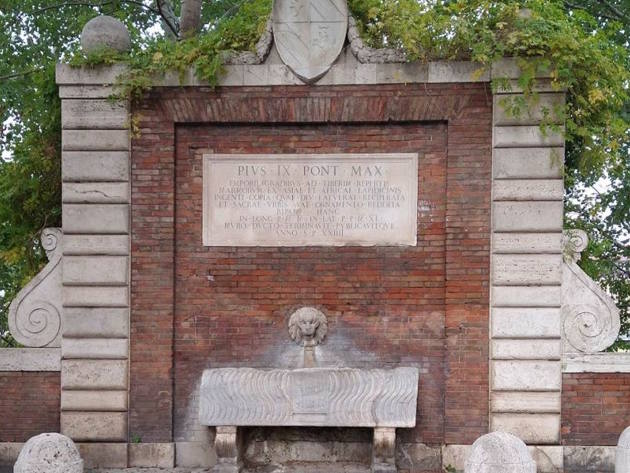
The fountain's brick facade is bordered by two travertine pilasters, carved with ashlar, crowned with spheres and decorated with volutes on the sides. The structure is surmounted by a Latin epigraph and the coat of arms of Pope Mastai Ferretti, featuring two rampant lions, framed by two festoons. The collection basin consists of a Roman sarcophagus, which collects water from a lion's head.
The fountain has undergone restoration in 1993 and again in 2000, following vandalism that damaged the sarcophagus.
Photo: Fountain of Pius IX in Lungotevere Testaccio, photo from the Capitoline Superintendency of Cultural Heritage website
Information
 Condividi
Location
To find out about all accessibility services, visit the Rome accessible section.