




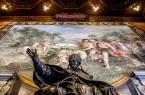












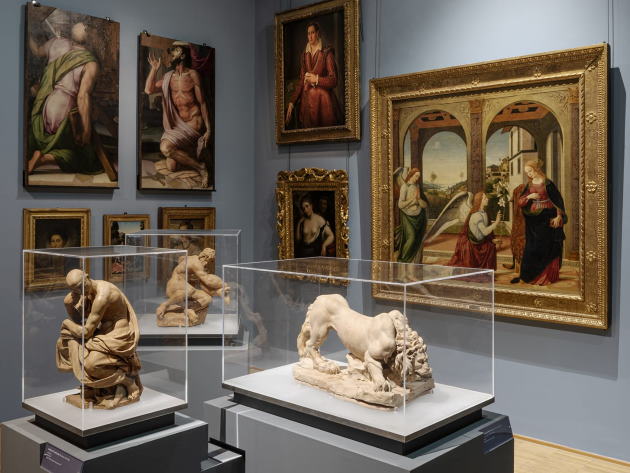
The present-day Accademia Nazionale di San Luca came into being through a series of developments that took place between the second half of the sixteenth century and the first half of the seventeenth century. Its origins can be traced back to the ancient University of the Arts of Painting in Rome, whose earliest statutes are dated 1478 and whose title page depicts Saint Luke receiving the rules of the art from four members of the University. The altarpiece (traditionally attributed to Raphael) in the small church of San Luca sull’Esquilino – the University’s first seat – was dedicated to the evangelist saint, patron of painters. It was later moved to the church of Santi Luca e Martina at the Roman Forum and finally to Palazzo Carpegna, where it is still preserved today.
After 1634, architects became members of the Academy on an equal footing with painters and sculptors. Since 1705, the Academy has adopted an equilateral triangle as its emblem, consisting of a paintbrush, a ruler and a compass, to express the equal dignity and unity of the three arts (painting, sculpture and architecture) under the aegis of drawing, as reaffirmed by accompanying motto of the poet Horace, “aequa potestas”.
The academic body comprises a total of one hundred and eighty members (ninety Italian, thirty foreign, thirty-six associate members, and twenty-four honorary members). The highest office of the Academy was assigned on a rotational basis to a representative of each of the arts. Until the statutes approved in 1812, it was held by a “Prince”, assisted in his institutional duties by two “Consuls”. The last Prince was Antonio Canova. After him, the title was changed to President.
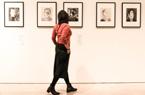
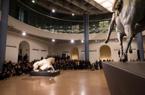
In keeping with tradition, the Academy promotes cultural activities aimed at promoting the fine arts. The Academy’s halls are used for book launches and for hosting lectures and conferences. Particular attention is paid to young artists and scholars through the awarding of prizes and scholarships, a practice that began as early as the late sixteenth century. Part of the Academy’s collections is on display in the Gallery, comprising, in part, paintings, sculptures and drawings created for the competitions organised regularly since the Academy’s earliest days. Other works are housed in the Academy’s halls, the Secretariat offices, the Conference Hall, the Academy Library, the Sarti Library, the Historical Archive and along the spiral ramp.
Information
For the opening times and guidelines please check the > official website
 Condividi
Locations
To find out about all accessibility services, visit the Rome accessible section.