















Rome in August, a month of unmissable events and visit opportunities. Find out what to do from 1 to 31 August 2026 and follow the suggestions thought up by our editorial staff to experience and admire the city, including along less beaten paths.
-
Roma Live events in August
-
New entries and special events in August
-
Rome free/low cost in August
-
Rome with kids in August
-
The days of Rome: key dates in the city’s history and traditions in August
-
The many facets of Rome: places of the ancient Rome, papal Rome and modern Rome to (re)discover in August
-
Itineraries and curiosities: our tips for August
Roma Live events
Roma Live is the calendar for experiencing Rome at 360°, a multimedia container dedicated to unmissable events for those living in the city and for tourists. Check here all the events for the month of August, and choose among the exhibitions, sporting events, concerts, theater shows, festivals, ballets and dance performances scheduled until 31 August. Please note: information available in this section is being updated constantly.
New entries and special events
-
Una notte nella Valle dell’Inferno - Woods, footpaths, ancient ruins, caves and waterfalls just a few kilometers from Rome. Until 5 September, every Friday and Saturday evening (from 9 pm to midnight), visitors can explore the most hidden corners of the Villa Gregoriana in Tivoli. A journey through time, by starlight, to discover the park commissioned by Pope Gregory XVI in the first half of the 19th century.
-
Herculaneum. The Art of Living - In 79 AD, a terrifying volcanic eruption brought life to a halt for the inhabitants living on the slopes of Vesuvius. The exhibition at Castel Sant’Angelo allows visitors to discover the city of Herculaneum, which was buried under mudflows after being engulfed by clouds of fire, through extraordinary artefacts that reveal its daily life, artistic refinement and cultural sophistication.
-
Living! Julian Beck pittore - A visionary and anarchic artist who spent forty years imagining worlds, through the theatre productions of the Living Theatre (which Julian founded alongside his life and artistic partner Judith Malina) and, before that, through his painting. This free exhibition, with which the Accademia Nazionale di San Luca is inaugurating its new exhibition space, Ripense, focuses on his work as a painter.
Rome free/low cost
Churches, palaces and fountains, courtyards and cloisters, elegant squares and secret piazzas, marbles and stones with a history stretching back thousands of years – even if you have a limited budget, the city does not skimp on its wonders. With the new pricing system, access to museums and monuments managed by Roma Capitale is free for all residents of Rome and the metropolitan city. For tourists and non-residents, on 2 August, as on every first Sunday of the month, both the national cultural sites and the museums run by Roma Capitale will open their doors to the public free of charge. On 30 Augut, as on every last Sunday of the month, entry will be free to the Vatican Museums (from 9 a.m. to 2 p.m., last admission 12.30 p.m.). There are also four small museums that are always free for everyone (Museo delle Mura, Museo della Repubblica Romana e della Memoria Garibaldina and Museo di Casal de’ Pazzi, from Tuesday to Sunday, and the Casa Museo Alberto Moravia, open on the second Saturday of the month), plus the FAO MuNe - Food and Agriculture Museum and Network (from Monday to Friday, with mandatory online reservation), Palazzo Sciarra Colonna (from Wednesday to Sunday) and Casa Pasolini (from Thursday to Sunday).
Free or low cost events and activities for the month of July include for example di M’illumino di Teatro a Garbatella (1-7 August), Monteverde Estate, Village Celimontana and Lungo il Tevere… Roma 2026; the films and talks at the Festival del Cinema di San Lorenzo 2026 (until 10 August) and the open-air screenings by Cinema Liberato in the Parco Andrea Campagna, Cinema alle Mura (4 and 6 August) and Notti di cinema a Piazza Vittorio; the free openings of Ferragosto al Museo 2026, the guided tour Passeggiate Romane: Roma in armi. La Storia a Villa Pamphilj (8 August), and the tours and special openings of the Malborghetto Arch and the Gabii Archaeological Park (2 August); the exhibitions Marco Tamburro. Caravaggio forever and Novecento italiano. Opere dalla collezione Generali at Palazzo Bonaparte (both until 23 August), Spagna e Italia: 50 anni da incorniciare at the Spanish Embassy in Piazza Navona, Cento anni dell’Antica Scuola Giardinieri at Parco San Sebastiano, and Site inspection/Sopralluogo at the Hungarian Academy in Palazzo Falconieri; the Jazz&Image 2026 music events at the Baths of Caracalla (until 16 August), the concert Un uomo in Blues - Il Tributo a Pino Daniele at Testaccio Estate (2 August) and La Casita special dedicated to Bad Bunny at Eur Social Park (7 August). Find more tips on the cultureroma website.
Rome with kids
Museums to explore, educational workshops and readings, theme parks, theatrical performances and much more... Discover all the events dedicated to children scheduled for the month of August and unleash your imagination among surprising adventures, journeys through history, interactive itineraries and guided tours. Our Kids page is updated weekly: visit us again for new ideas!
The days of Rome: key dates in the city’s history and traditions
Rites, festivals, anniversaries and celebrations have always marked the life of the city, its inhabitants and its visitors: a dense calendar of fixed happenings dating back to past eras, but also to the present day, that define Rome’s identity. Discover with us some of the city’s old and new special dates and moments, with the most heartfelt or awaited occasions – or even simply the most curious ones for the month of August.
The many facets of Rome: places of the ancient Rome, papal Rome and modern Rome to (re)discover
The pagan Rome that was the center of one of the largest empires that ever existed; the symbol city of the Catholic religion shaped by the successors on the throne of Peter; the new capital of the Kingdom of Italy and then of the Republic. The history of an eternal city is inevitably made up of multiple narratives that intertwine with one another. Each month, we will introduce you to three places that show the different imagines of Rome through the centuries.
-
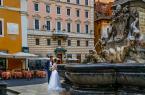
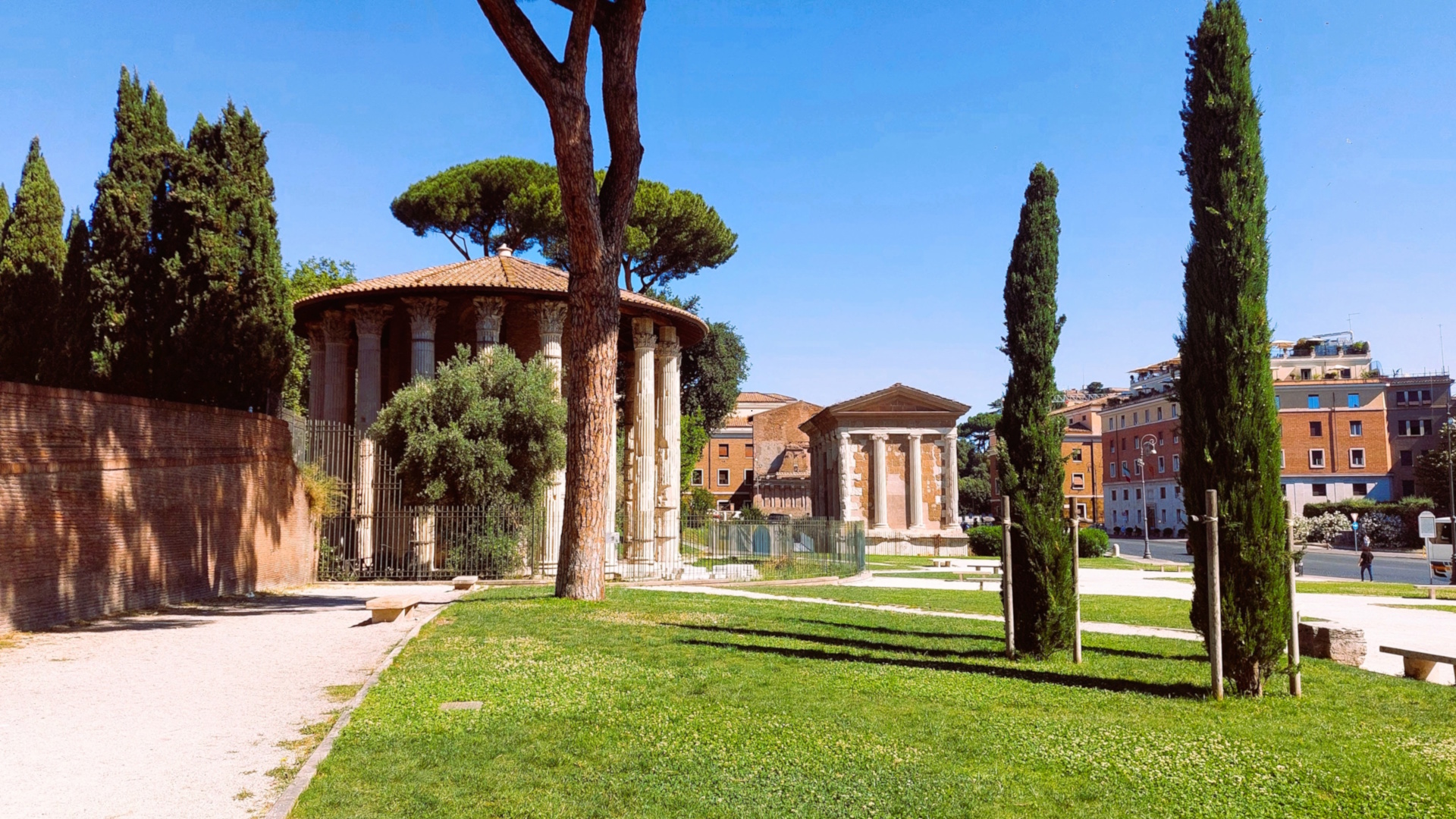
The Temple of Portunus - An archaic god with an apparently shifting sphere of influence (gates and harbours, both access points requiring guarding) and a perfectly preserved thanks to its conversion into a Christian church – dedicated at the end of the 15th century to the nun and hermit Mary of Egypt, patron saint of prostitutes by virtue of her legendary turbulent youth. Information on the public worship of Portunus (who was equated with the sea god Palemon towards the end of the Republican era) is actually very scarce. We know that he was presided over by the flamen portunalis, one of the twelve minor flamines, and that he was celebrated during the Portunalia on 17 August. According to the scholar Varro, it was on this very day that his temple was dedicated; in its present form, it dates back to the 2nd-1st centuries BC and is set against the spectacular backdrop of the Forum Boarium, the site where many of the myths surrounding the founding of Rome intertwine.
-
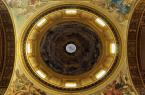
The Church of San Marcello al Corso - In August 1522, in a Rome brought to its knees by the plague, a vast penitential procession led by the cardinal of the Church of San Marcello wound its way through the city’s streets for sixteen days. They invoked (and obtained) divine mercy through a large wooden crucifix carried on the shoulders – believed to be miraculous since, just a couple of years earlier, it had survived the fire that had destroyed the church whose high altar it had adorned. Begun immediately after the fire, based on a design by the Florentine architect Jacopo Sansovino, the reconstruction of San Marcello continued until well into the 17th century, resulting in the beautiful late-Baroque façade by Carlo Fontana, squeezed between the street and the neighboring buildings, and adorned with columns, niches and statues. Inside, the fourth chapel on the right still houses the crucifix, which has been the object of uninterrupted devotion to this day.
-
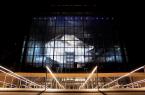
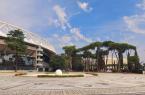
Leonardo da Vinci Airport - A “paradise in the skies” envisaged as early as 1947 as a symbol of the new democratic Italy, and later of the economic boom. Italy’s largest airport (which in June was named the best in Europe for the fifth consecutive year and for which passenger traffic is estimated to reach 100 million by 2046) only began to take shape in August 1958, with the approval of a design combining the architectural solutions of Riccardo Morandi and Andrea Zavitteri (winners of the competition) with those of Luccichenti and Monaco. Two years later, on 20 August 1960, five days before the start of the Olympic Games in Rome, the airport was inaugurated and opened to very limited air traffic to ease the strain on Ciampino. The facility did not officially become operational until January 1961, with the landing of the first scheduled flight – a TWA Lockheed Constellation arriving from New York.
Itineraries and curiosities: our tips
-
Ancient Rome and the love for Egypt - In August 30 BC, a year after the Battle of Actium, Alexandria in Egypt fell to Octavian, sealing the fate of Mark Antony and Cleopatra, who both took their own lives. Having become a Roman province (and an exhibition in the Octagonal Hall of the Baths of Diocletian tells its story), the land of the Pharaohs would, however, in turn capture the city’s imagination, which would soon be filled with symbols, customs and deities from the Nile. Find out more in the dedicated page.
-
Pilate’s steps: the Holy Stairs and the Sancta Sanctorum - A set of 28 white marble steps (encased in wood in the early 18th century) to be climbed on one’s knees. Since 1590, the stairs of Pilate’s Praetorium, which Jesus is said to have climbed before his death sentence, are in the sanctuary commissioned by Sixtus V. The sanctuary also houses the Sancta Sanctorum, the personal chapel of the early popes: until 31 August, its reliquaries are the focus of the photographic exhibition Thesaurus Pietatis. Find out more in the dedicated page.