









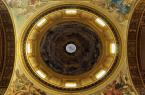





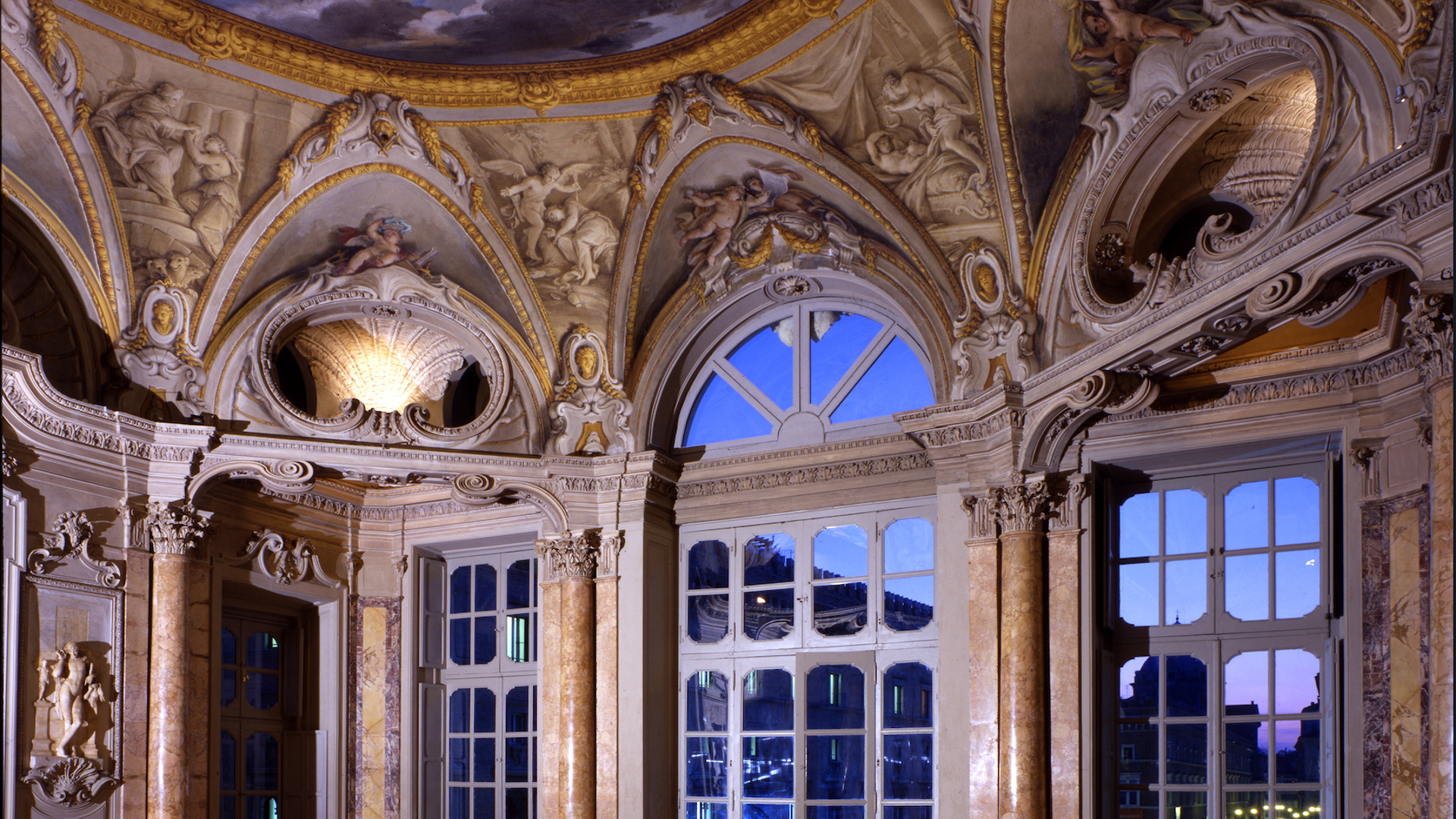
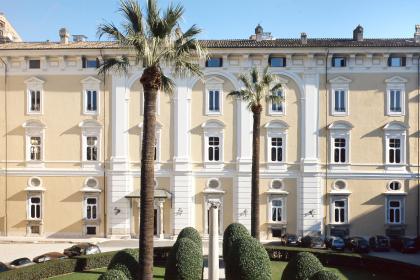
An artistic and architectural jewel, located in the heart of Rome’s most aristocratic and Baroque area, the Coffee House of Palazzo Colonna corresponds to the south-eastern pavilion of the perimeter enclosing Palazzo Colonna, a majestic historic residence.
The construction represents one of the final architectural enhancement projects on the southern side of the complex – the most representative section, which also includes the grand Gallery – and was carried out between 1730 and 1733, at the initiative of Constable Fabrizio IV, more than seventy years after the works first promoted by Cardinal Girolamo I around the mid-seventeenth century.
From an artistic perspective, the Roman Rococo style that characterises the pavilion is one of the most successful examples of a style which, within the Coffee House, becomes a miracle of harmony, yet was not widespread in Rome, where the Baroque predominated.
The architect Nicola Michetti, responsible for the creation of this delightful structure, succeeded in enlivening the rather solemn character of Roman architecture with numerous ideas drawn primarily from the theatrical scenography of Francesco Galli Bibiena. In particular, he employed the so-called “angled perspective”, where the use of oblique planes – alternately applied to the corners of the Coffee House’s octagon – creates the illusion of a much larger space than it actually is.
Moreover, with refined archaeological taste, Michetti integrated into the setting the ancient reliefs embedded in the walls, most of which date back to the most refined phase of Roman art, spanning the reigns of Augustus to Hadrian. Later, the two satyrs flanking the entrance to the terrace connecting to the grand Gallery were also installed.
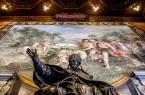
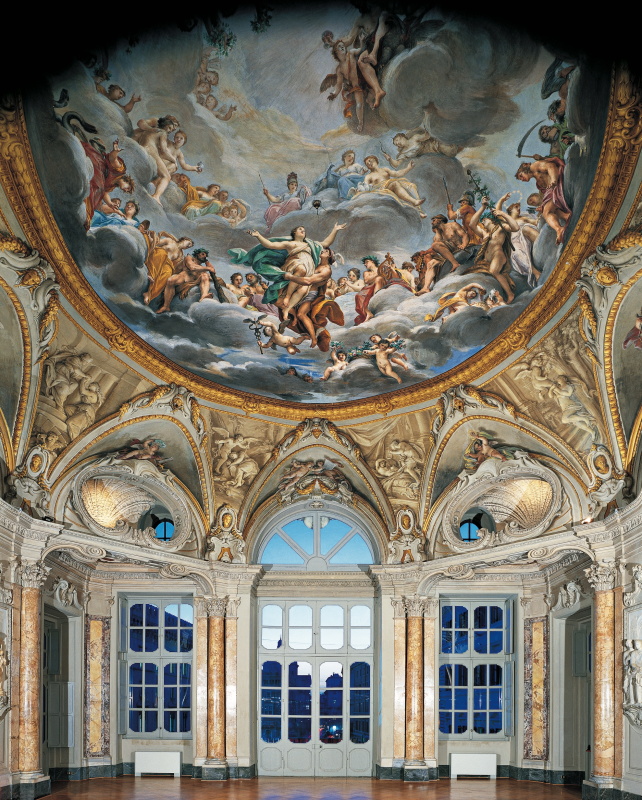
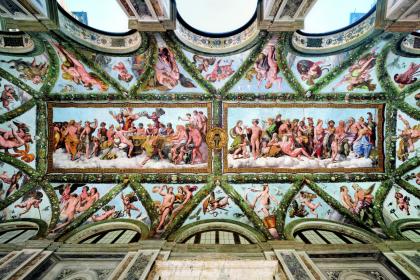
The ceiling decoration is the work of Francesco Mancini (1705–1758) and depicts the complex and romantic tale of the myth of Psyche – the same theme inspiring Raphael’s decoration in the Loggia of Cupid and Psyche at Villa Farnesina – culminating in the triumphant apotheosis of Psyche. The painter, a member of the Accademia di San Luca, studied in Bologna under Carlo Cignani, from whom he inherited the ability to evoke the gentle sweetness of Guido Reni’s art.
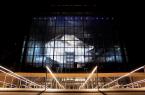
View of the Coffee House of Palazzo Colonna Photo: Coffee House of Palazzo Colonna
Palazzo Colonna
 Condividi
Villa Farnesina
 Condividi
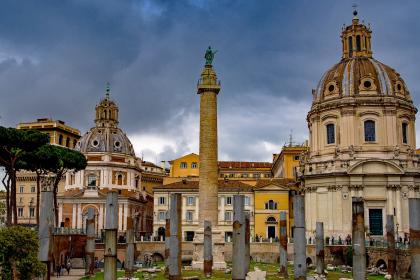
The Trajan’s Column
 Condividi
Information
Condividi
Location
To find out about all accessibility services, visit the Rome accessible section.