




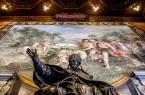




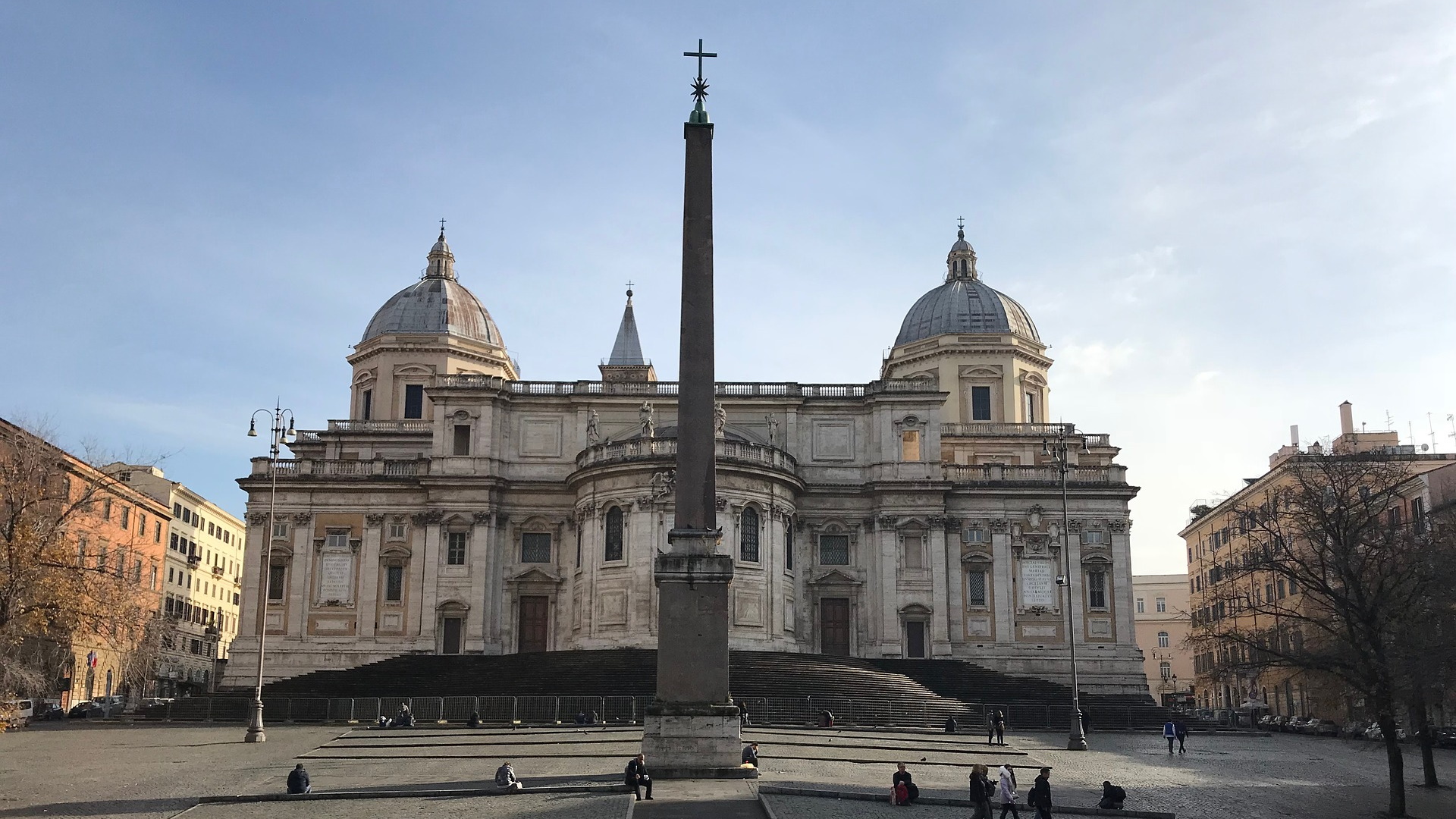
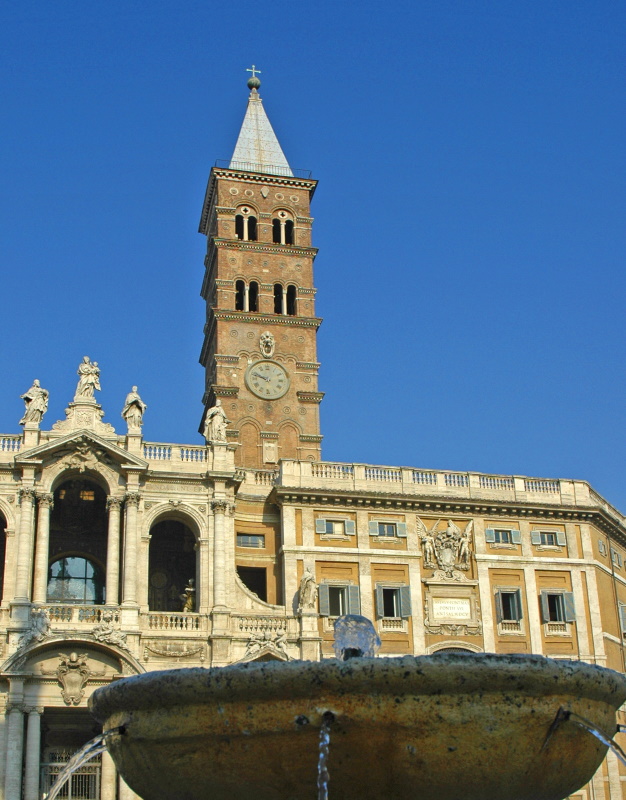
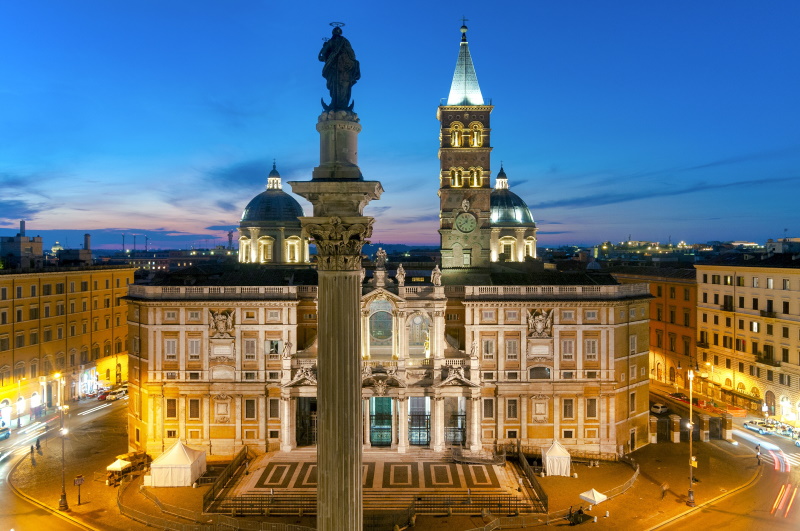
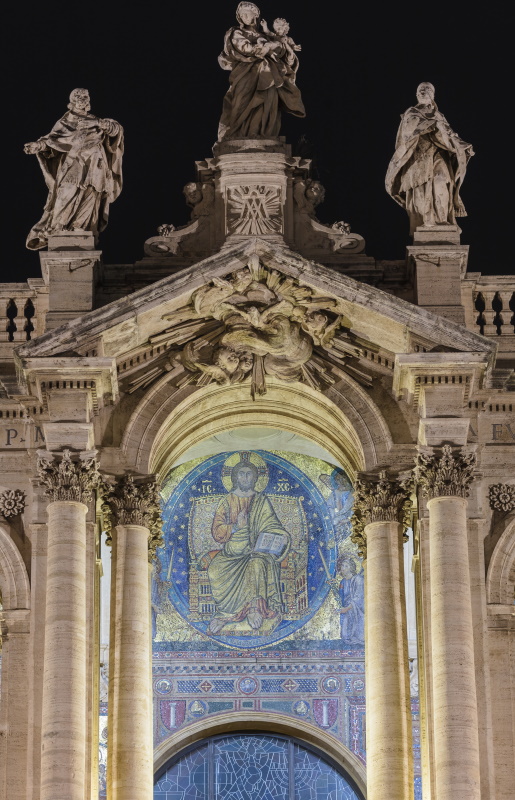
At the summit of the Esquiline Hill, the majestic Basilica of Santa Maria Maggiore stands proudly, one of the four papal basilicas of Rome, a true architectural gem that not only enchants with its beauty but also tells the story of centuries of faith, power, and art.
Legend has it that the wealthy Roman patrician Giovanni and his wife, having no children, decided to dedicate a church to the Virgin Mary after she appeared to them in a dream one August night in 352 AD. In the dream, the Madonna informed them that a miracle would reveal the location where the church should be built.
Pope Liberius also had the same dream, and the next day, when he went to the Esquiline, he found it covered in snow. The pope himself marked the perimeter of the building, and the church was built at the expense of the two spouses.
Even today, every year on 5th August, the miracle of the snow is commemorated with a special celebration during which white petals are released from the summit of the basilica, creating a truly spectacular and unmissable effect.
Inside the basilica, you can admire the first immobile nativity scene in history, The Nativity by Arnolfo di Cambio, the brilliant Tuscan artist and renowned sculptor trained in the workshop of Nicola Pisano.
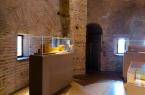
The Sacred Cradle, a reliquary made of rock crystal in the shape of a cradle, designed by Giuseppe Valadier (1802), holds five wooden sycamore sticks that are part of the manger where the infant Jesus was laid. These have been scientifically dated to the period of His birth, emphasizing the significance of Santa Maria Maggiore as the “Bethlehem of the West” and Rome's basilica of the Nativity.
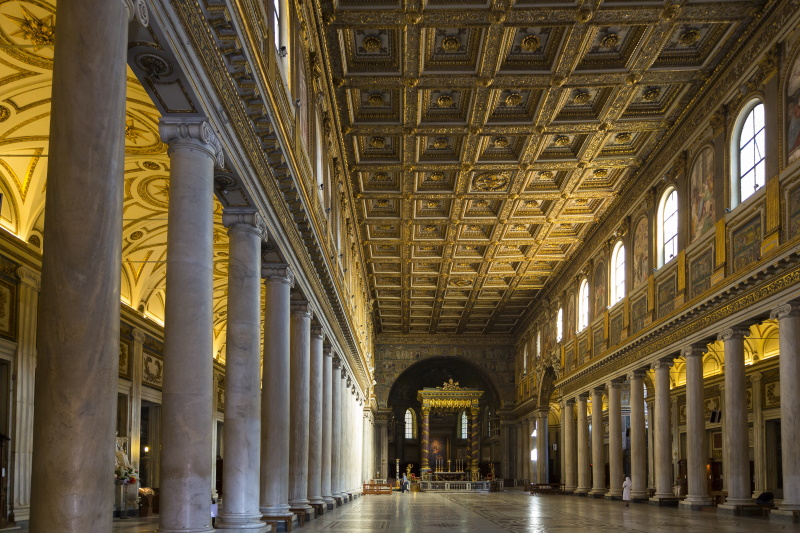
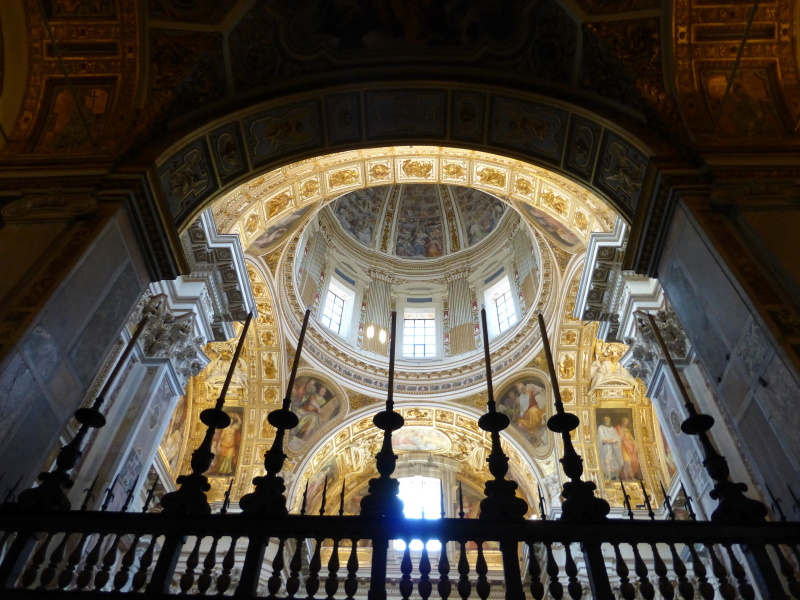
The basilica is the only one to have preserved its original Paleochristian structure, and its medieval appearance, though enriched by subsequent additions, remains largely intact. Santa Maria Maggiore underwent profound transformations between the late 16th and early 17th centuries, initiated by Pope Sixtus V and Pope Paul V, who erected the two great side chapels, known as the Sistine and Pauline chapels, as well as the palace to the right of the façade.
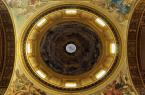
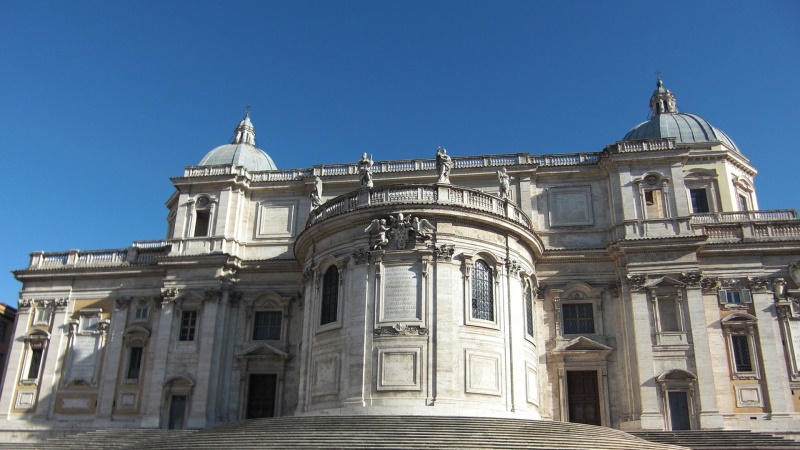
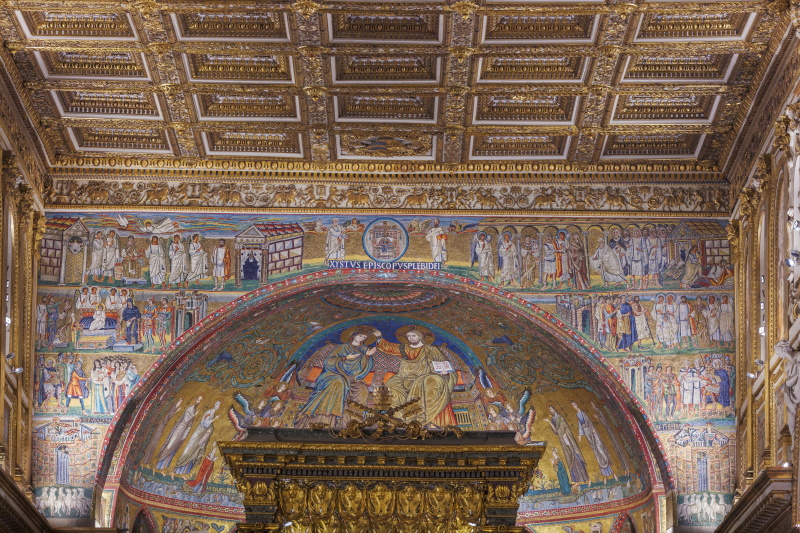
Between 1670 and 1676, Carlo Rainaldi redesigned the apse in its current form. Its lavish interiors house important works of art, while mosaics dating back to the 5th century can still be seen on the walls of the central nave.
The ceiling dates back to the time of Pope Alexander VI Borgia (1492–1503) and, according to tradition, was gilded with the first shipment of American gold, a gift from Isabella of Spain.
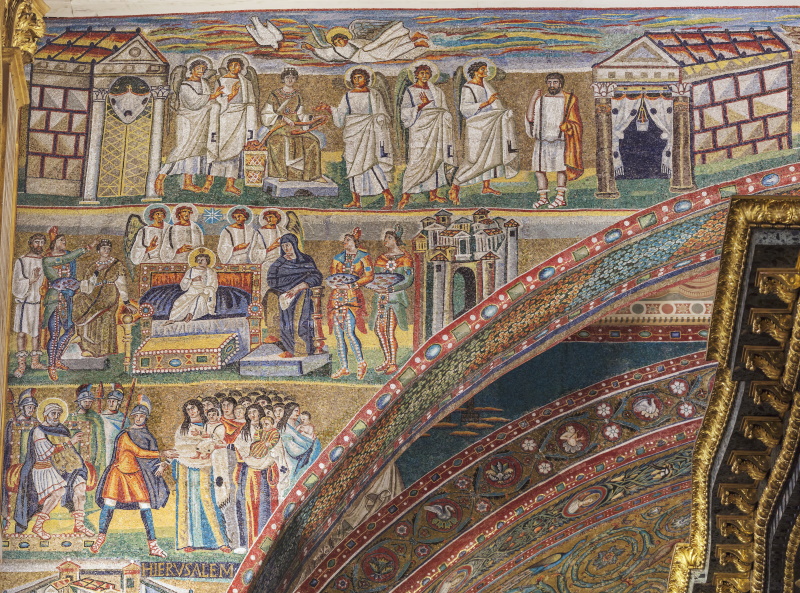
The triumphal arch is adorned with mosaics depicting scenes from the Infancy of Jesus from the time of Pope Sixtus III. In the apse, the beautiful mosaic was created and signed by Iacopo Torriti at the end of the 13th century.
However, the true wealth of Santa Maria Maggiore lies in the stories it keeps within its walls. Here, some of the popes who have shaped the history of the Church and, with their vision and initiatives, also transformed the artistic and cultural face of the city are buried: Honorius III (1216-1227), Nicholas IV (1288-1292), Pius V (1566-1572), Sixtus V (1585-1590), Clement VIII (1592-1605), Paul V (1605-1621), Clement IX (1667-1669), Pope Francis I (2013-2025), the pontiff of dialogue and universal spirituality.
Among the most revered treasures of Santa Maria Maggiore, the Byzantine icon of the Salus Populi Romani, traditionally believed to have been painted by St. Luke the Evangelist, has been considered a special protector of the city of Rome and its people for centuries, a symbol of hope and intercession. Over time, popes have frequently called upon its intercession in moments of difficulty, and it has often been carried in procession through the streets of Rome to invoke its divine protection.
But Santa Maria Maggiore also houses the remains of Gian Lorenzo Bernini, one of the most extraordinary artists Rome has ever known. The unmatched genius of Baroque art, Bernini shaped the city with his sculptures and architecture and rests in the right lateral nave of the basilica alongside his family. While his works were grandiose, his tomb is modest. He designed it himself and it bears a simple Latin inscription expressing his hope for resurrection for himself and his loved ones: "NOBILIS FAMILIA BERNINI HIC RESVRRECTIONEM EXPECTAT".
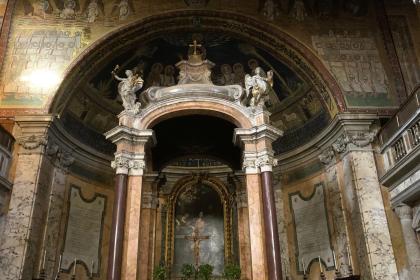
The Basilica of Santa Prassede
 Condividi
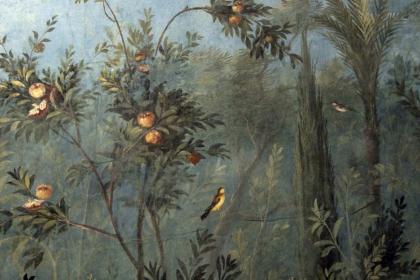
National Roman Museum - Palazzo Massimo alle Terme
 Condividi
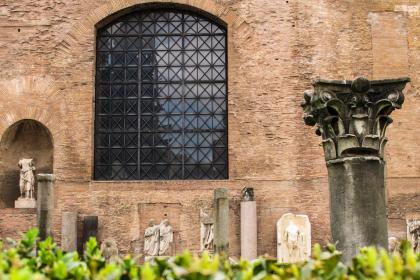
Museo Nazionale Romano - Baths of Diocletian
 Condividi
Information
For the timetable of the masses and visiting conditions, please consult the contacts.
Condividi
Location
To find out about all accessibility services, visit the Rome accessible section.