













Pallavicini Rospigliosi Palace: the ambitious dream of Scipione Borghese
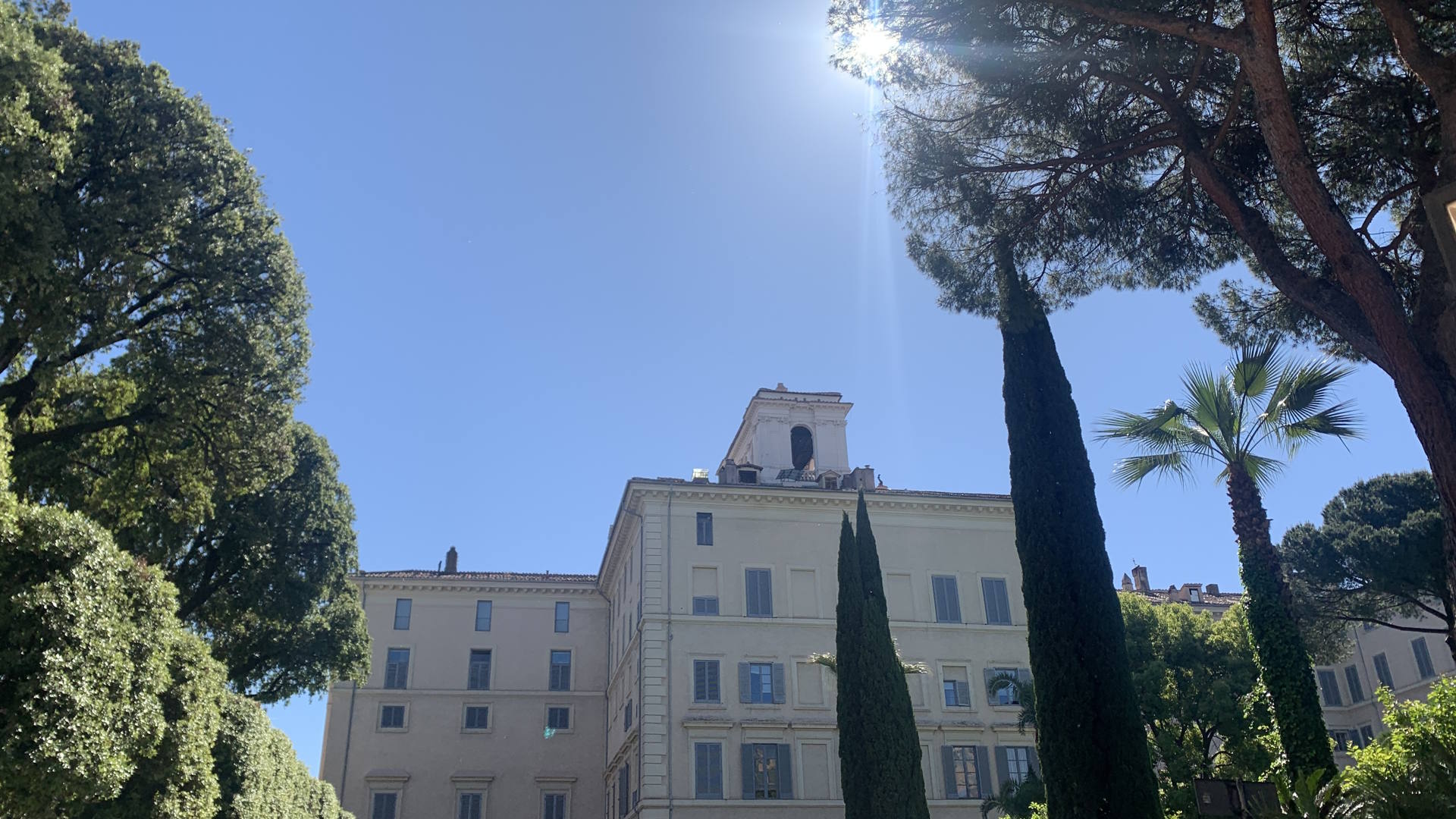
Monumental and elegant, Pallavicini Rospigliosi Palace stands on Via 24 Maggio, on the Quirinale Hill, in front of the palace of the same name, the seat of the Presidency of the Republic.
The complex is the result of Cardinal Scipione Borghese’s vision; he intended to transform the area formerly occupied by the ancient Baths of Constantine into a sumptuous representative palace that would reflect the prestige and role of the powerful Roman family, integrating this ambitious project into the wider scheme to enhance the hill promoted by his uncle, Pope Paul V.
The grand aristocratic residence was built in the early 17th century to a design by Flaminio Ponzio, later followed by Carlo Maderno, whilst the Flemish architect Giovanni Vasanzio simultaneously created the beautiful ‘Garden of Delights’, featuring spectacular architectural elements and a monumental nymphaeum. Over the years, the palace underwent several changes of ownership, involving some of the most prestigious aristocratic families of the time – the Altemps, the Bentivoglio, the Lantes, Cardinal Giulio Mazarino – a leading figure on the European political scene of the 17th century – the Mancinis, his heirs, and, finally, the Pallavicini Rospigliosi, owners since 1704 – undergoing, following the refined architectural interventions by Scipione Borghese, further works of enlargement and transformation.
Between restraint and harmony: the elegant architecture of a historic residence
A refined and spacious courtyard leads into the current Pallavicini Rospigliosi Palace, an architectural ensemble of solemn elegance, shaped over time. An enchanting loggia-belvedere crowns the building, whose austere façades are characterised by rusticated sides and a central portico, a distinctive feature of the main entrance.
The interiors, with their large rooms richly decorated with frescoes and fine ornamental elements, preserve an extraordinary artistic heritage. The piano nobile houses the Pallavicini Gallery – one of Rome's most significant private art collections, established in the second half of the 17th century by Cardinal Lazzaro Pallavicini – which includes over 500 works by great artists such as Botticelli, Pietro da Cortona, Domenichino, Rubens, Lotto, and Guido Reni.
Myth, art and nature: the green setting of the Roman aristocracy
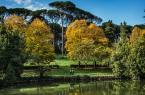
An essential part of the aristocratic residence, the green areas of Palazzo Pallavicini Rospigliosi were designed as leisure spots and symbols of aristocratic prestige, initially arranged across different levels. Although they have transformed compared to their original layout, they still preserve some spectacular examples of the original landscape vision – a dialogue between nature, architecture and art. A majestic nymphaeum is the spectacular backdrop to the so-called secret garden, in the most intimate part of the complex. Built in 1613 and also known as ‘the theatre’, the structure has a semi-circular shape with a large central niche housing a basin decorated with sculptural elements, such as a large mask, surmounted by a sphere decorated with a lozenge that recalls the Rospigliosi family coat of arms and flanked by two large vases. On either side, two large grotto-like niches contain statues representing the rivers Tiber and Po.
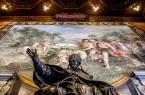
Adjacent to the main courtyard, on an elevated level, is the charming hanging garden, accessible via the ‘Scala della Pastorella’, which houses the famous Casino dell’Aurora, a jewel of Roman Baroque architecture. The façade, adorned with marble bas-reliefs from Roman sarcophagi dating from the 2nd and 3rd centuries AD, opens onto rooms decorated with true masterpieces: from Guido Reni’s marvellous fresco of the Aurora on the vault of the central room to Paolo Bril’s Four Seasons; from Cherubino Alberti’s Putti to Antonio Tempesta’s Triumphs, up to the frescoes on the vaults of the two side rooms: the Battle between Rinaldo and Armida by Domenico Cresti, known as Il Passignano, and the Tale of Armida by Giovanni Baglione, as well as Baroque and Roman sculptures.
Palazzo Pallavicini Rospigliosi ph. Turismo Roma
Information
Visit with a special authorization by the Pallavicini administration.
 Condividi
Location
To find out about all accessibility services, visit the Rome accessible section.