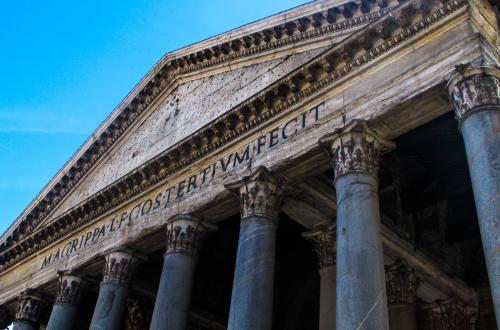
L’Amphithéâtre Flavio (Colisée)
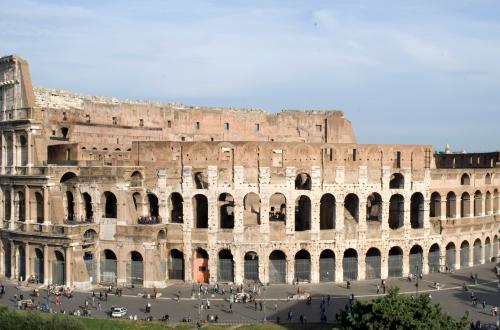
L’Amphithéâtre Flavio (Colisée)
Monuments
 Condividi




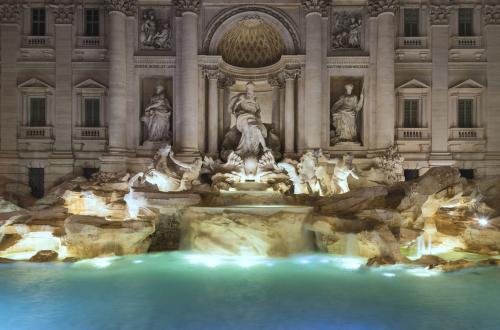
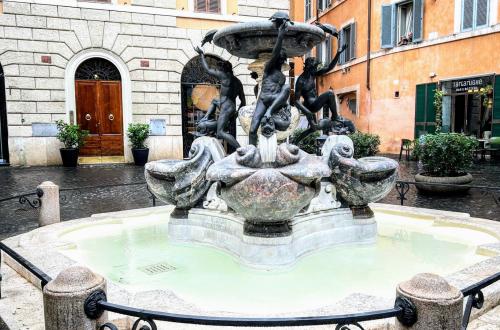
La plus célèbre des fontaines romaines: un joyau d'eau et de pierre
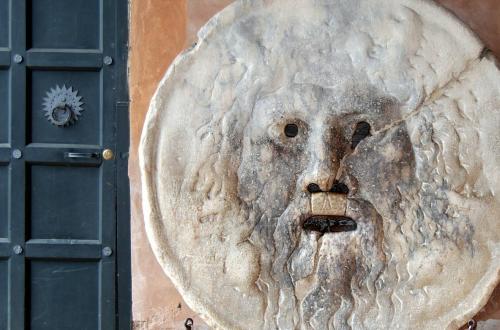
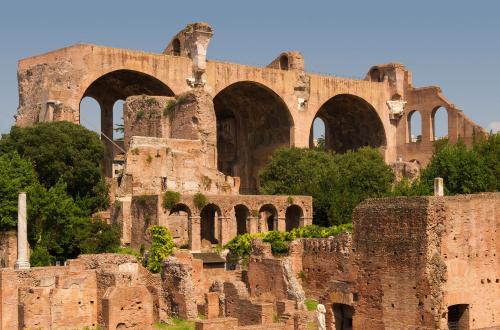
Selon la légende, l'histoire de Rome commence ici

An unmissable opportunity to plan your own future in the field of Fashion
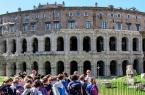
Roma è una meta perfetta per il turismo e in particolare per il settore di visite e viaggi scolastici
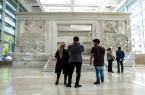
The inestimable artistic heritage of Rome is the preferred destination for the many students who decide to benefit from the many cultural opportunities that the city offers
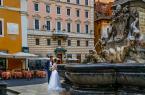
Rome is the perfect choice for a romantic and refined wedding, enriched by a millenary history

Tradizione, maestria sartoriale e tecnologie innovative in un contesto unico al mondo
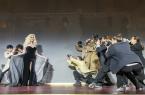
Glamour, mito e bellezza: una città dove anche la moda è leggenda
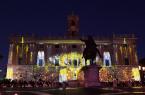
Bellezza e arte, magnifiche spettatrici di una storia millenaria
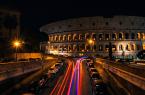
Le infinite occasioni per il divertimento a Roma
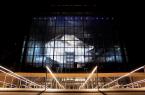
Roma è la destinazione ideale per il turismo Business
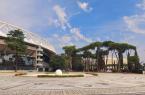
Come e dove vivere in diretta le emozioni degli eventi sportivi

Come e dove allenare corpo e mente nella seconda capitale più verde d'Europa
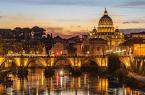
Histoire, anecdotes et informations pratiques pour profiter pleinement de la magie de la Ville éternelle
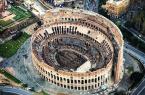
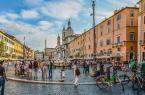
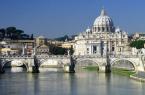

Seven unusual itineraries to discover the city from new perspectives
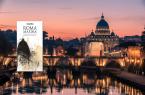
Stories, places, and secrets – a guidebook to an eternal city.

A puzzle of voices and experiences: bloggers explain Rome

Une grande richesse de connaissances et d'expériences accumulées dans le passé
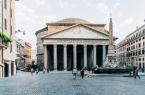
Richesse, splendeur et magnificence immergées dans la magie de l’histoire
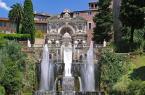
Découvrez la charmante Tivoli et ses merveilleuses villas


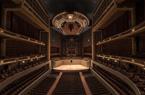

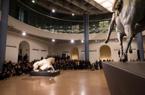
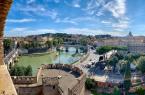
Un itinerario tra architetture millenarie e ardite visioni contemporanee
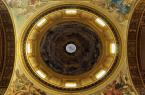
Rome, la scénographie idéale de chefs-d’œuvre du cinéma et de grandes mélodies
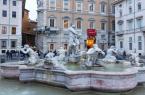
Un voyage dans les musées de la Piazza Navona et ses environs

Un itinéraire pour ceux qui veulent, en peu de temps, connaître les incontournables attractions de Rome

Trois jours intenses pour découvrir les attractions incontournables de Rome
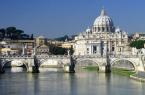
A perfect five day itinerary for an unforgettable Roman holiday
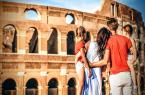
Indoor & outdoor activities and attractions
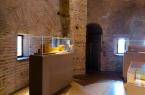
À la découverte de précieuses collections de la préhistoire à l’art contemporain

Les recettes simples et savoureuses de la tradition

Un dessert typique des Chateaux Romains d'origine très ancienne

L'âme marine de Rome
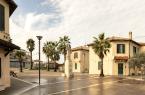
Saveurs et traditions anciennes dans un lieu où le temps semble s’être arrêté
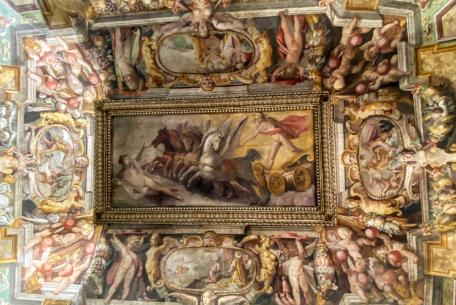
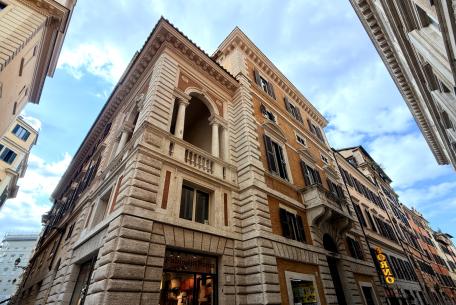
Located between Via del Corso and Via della Scrofa, the 16th-century Palazzo Firenze is a histor
[...]
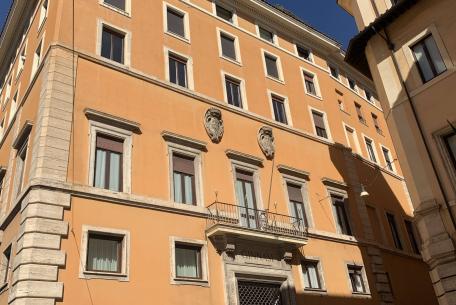
In 1528, the Florentine banker Luigi Taddeo Gaddi bought a modest house in Via del Banco di Santo Spirito from the Strozzi family, on the site of which he immediately built the family palace, using
[...]
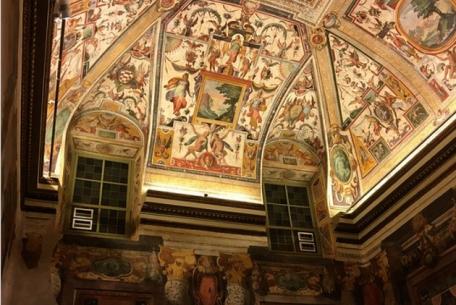
The current Palazzo Ginnasi is the building that replaces the old Palazzo Ginnasi, partially demolished between 1935 and 1940 when the street was widened, of which it still retains the two coats of
[...]
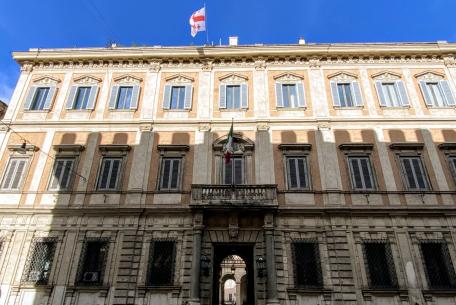
Le palais, actuellement la résidence du président du Sénat, appartenait à la famille Giustiniani, qui l'a acheté en 1590 après s'être transférée à Rome provenant de l'île de Scio dans la mer Égée,
[...]
Situé sur la Via del Plebiscito, à quelques pas de la Via del Corso, le Palazzo Grazioli, tel que nous l
[...]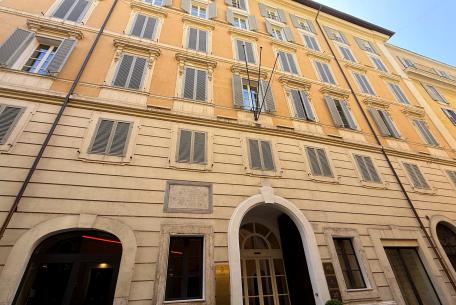
Palazzo Incontro is a historic building in Rome, located in the Campo Marzio district, built in the second half of the 18th century, exactly in 1765 by the architect Giovanni Paolo Burij.
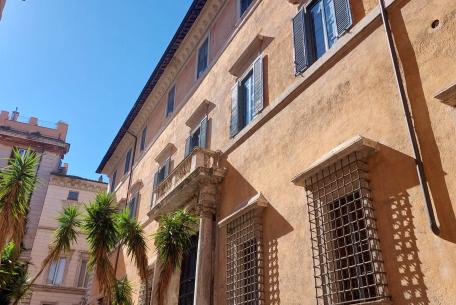
It was build at the end of the 16th century by Cardinal Scipione Lancellotti, who commissioned it to Francesco da Volterra and was completed by Carlo Maderno.
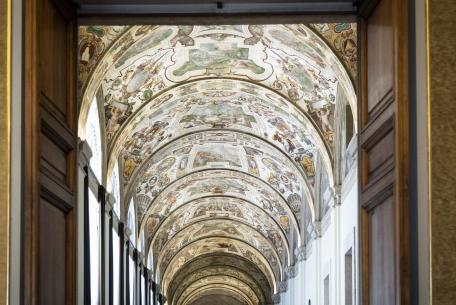
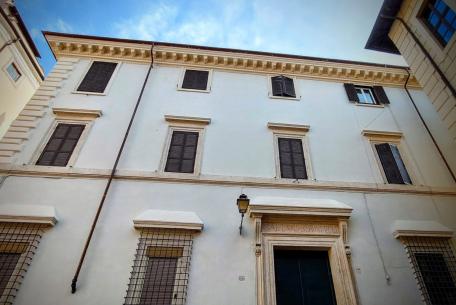
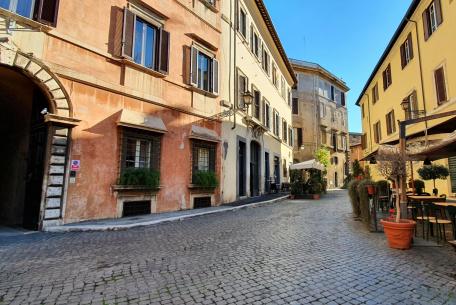
The palace dates back to the early seventeenth century and belonged to the Maccarani family; in the second half of the 17th century it was purchased by the Odescalchi Princes, who still own it, and
[...]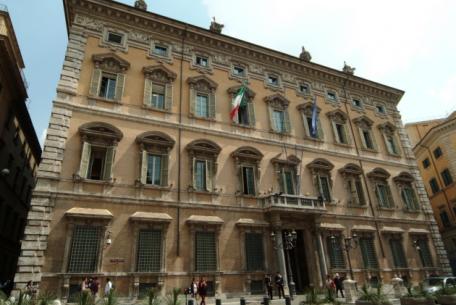
Le terrain sur lequel le Palais Madama fut construit fut cédé en 1478 par les moines de l'abbaye impériale de Farfa à la France, qui cherchait un lieu pour accueillir les pèlerins
[...]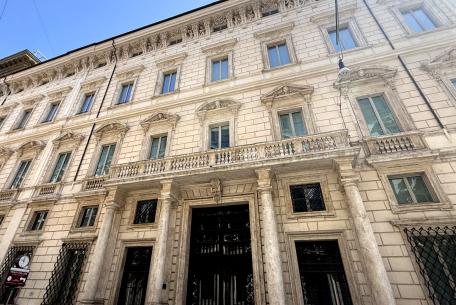
The Palace, now the headquarters of the Banco di Sicilia, was built in 1662 to a design by Carlo Rainaldi for the Duke of Nevers, Filippo Giuliano Mazzarino Mancini.
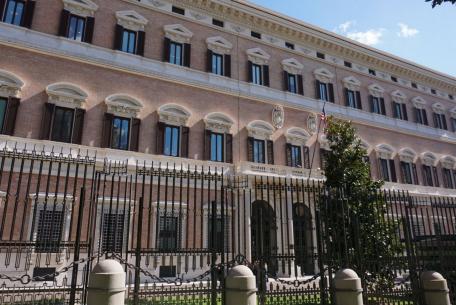
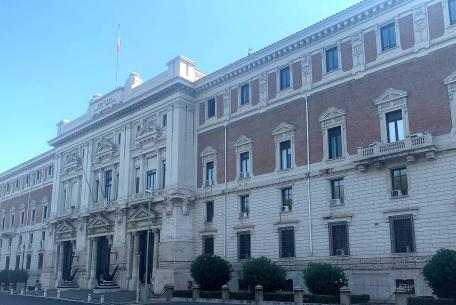
The Palace, designed by architect Giulio Magni, Valadier's nephew, was started in 1912, and was inaugurated on 28 October 1928.
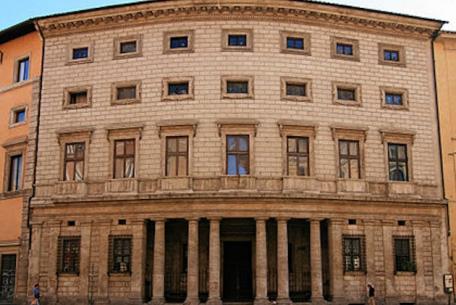
Le palais se dresse le long du Corso Vittorio Emanuele II, en plein centre-ville, et est le chef-d'œuvre de l'architecte Baldassarre Peruzzi qui le fit construire
[...]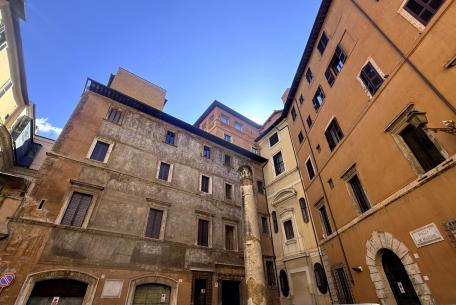
Its name was taken from a statue of the god Mars found in the foundation excavations and mistakenly believed to be a representation of the leader Pyrrhus, king of Epirus, defeated by the Romans in
[...]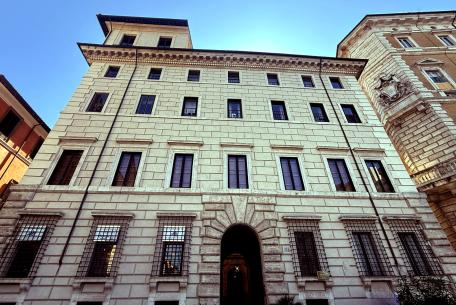
In 1508 Luigi De Torres had the palace built by the Neapolitan architect Pirro Ligorio to make it the family palace.
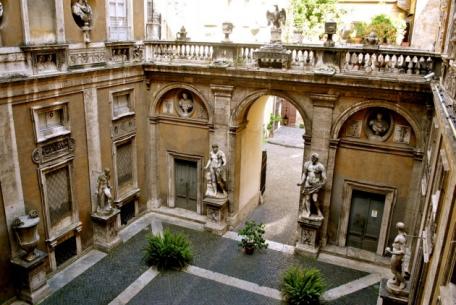
Le Palais Mattei di Giove, également connu sous le nom de Palais Antici Mattei ou Palais Mattei ai Funari, se dresse sur la Via Michelangelo Caeta
[...]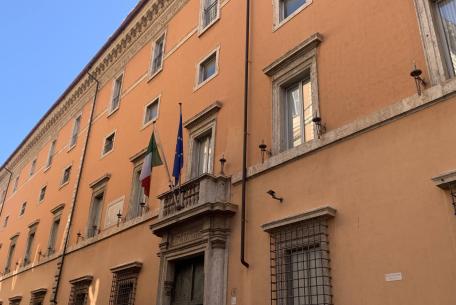
The building, located in Piazza Paganica, was erected in 1541 at the behest of Ludovico Mattei, Duke of Paganica, to a design attributed to Nanni di Baccio Bigio.
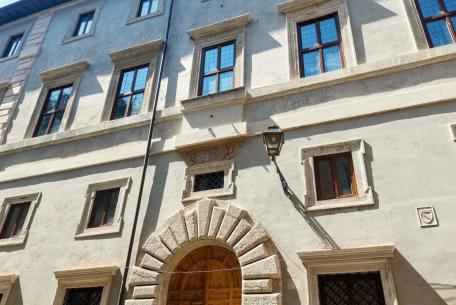
The Sangallo Medici Clarelli Palace was built by Antonio da Sangallo the Younger (1483-1546) together with his co-worker Dosio around 1535 as his private residence.
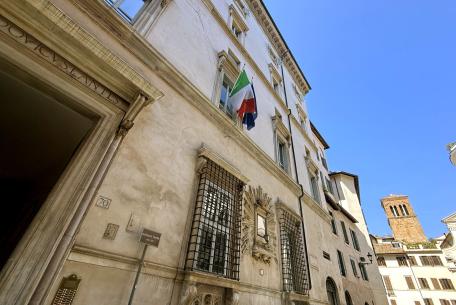
Le palais fut édifié après 1516 à la demande d’Alfonsina Orsini, épouse de Piero de Médicis, qui possédait déjà un palais voisin, appelé par la su
[...]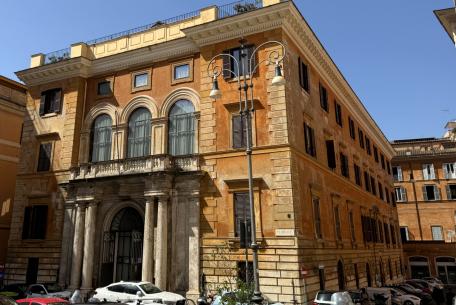
The palace was built in 1660 by De Rossi, a pupil of Bernini, probably on the occasion of the marriage of Pompeo Muti Papazzurri to Maria Isabella Massimo.
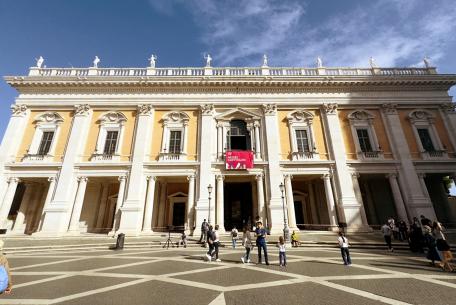
Le Palazzo Nuovo du XVIIe siècle se dresse en face du Palazzo dei Conservatori, sur la splendide Place du Capitole, projetée vers le milieu du XVIe siècle par
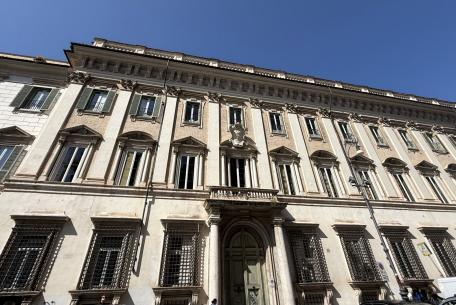
Le noyau d'origine du palais remonte au XVe siècle, époque à laquelle il était la résidence de la famille Benzoni.
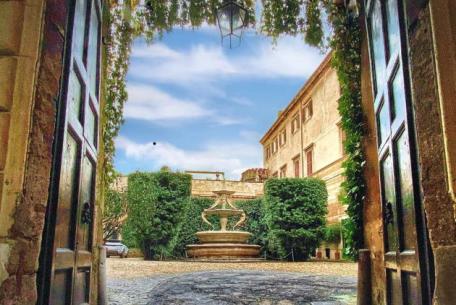
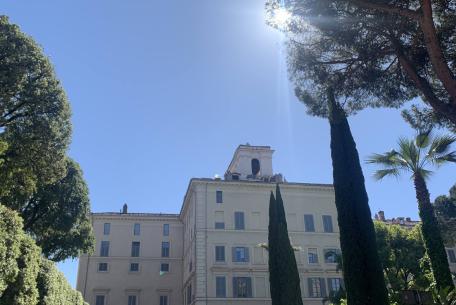
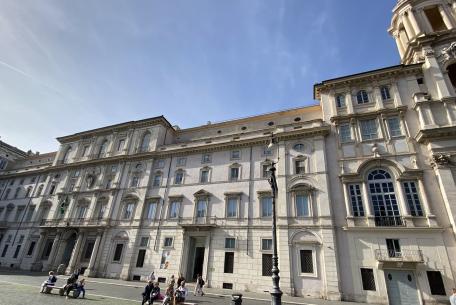
Voulu par le pape Innocenzo X (1644-1655), Giovanni Battista Pamphilj, en 1644, dans le but de rassembler toutes ses propriétés présentes sur la place Pasquino, le Palais fut édifi
[...]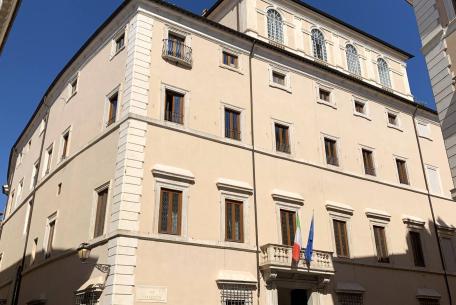
The palace was built at the end of the 16th century by an unknown family, whose abraded coat of arms can be seen on the cornice and in the courtyard, on the site of the Melangolo Tower, shown on Bu
[...]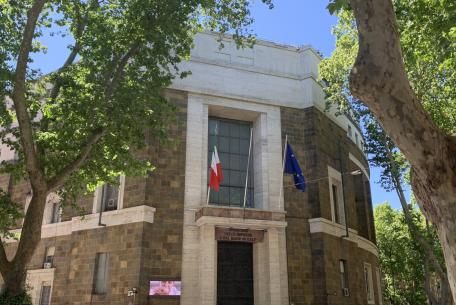
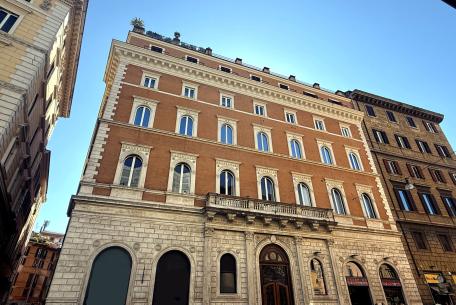
Il Ministero delle Imprese e del Made in Italy ha sede nello storico Palazzo Piacentini, realizzato da due figure di spicco del panorama architettonico italiano: M
[...]
The present Palazzo Pichi Manfroni Lovatti is a copy of the original building by Gerolamo Pichi demolished in 1881 for the construction of Corso Vittorio Emanuele II.
Condividi
 Condividi
 Condividi
 Condividi
 Condividi
 Condividi