
















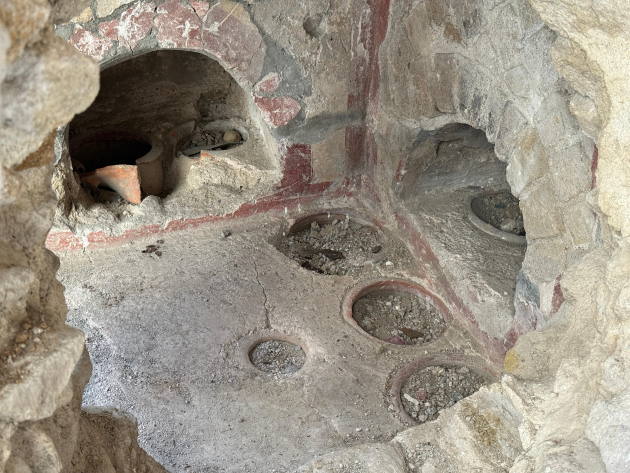
A new section of the via Ostiense Burial ground near the Rupe di San Paolo, one of the most significant funerary complexes in the ancient city, is open to visitors for the first time. The safety, conservation, restoration, and museum-ready works, carried out by the Capitoline Superintendency of Cultural Heritage as part of the PNRR – Caput Mundi program, have been completed.
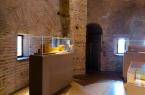
The project's primary objective was the conservation and enhancement of the archaeological complex through a program of interventions aimed at eliminating critical conservation issues, securing the masonry structures, and restoring the surfaces and decorative features, restoring full visibility to the site. Specifically, the masonry was consolidated, the extraordinary ancient plasterwork was restored, and invasive vegetation was removed from the cliff above. At the same time, a new visitor path was created, featuring educational panels, life-size reproductions of the frescoes—now housed at the Porta San Paolo Museum—and a modern scenic lighting system, as well as new security and video surveillance systems.
The area undergoing restoration preserves nine tombs unearthed between 1932 and 1933, spread between the via Ostiense front and an internal courtyard carved into the cliffside. The complex documents the evolution of Roman funerary practices between the 1st century BC and the 4th century AD, demonstrating the transition from cremation to inhumation through the presence of columbaria, arcosolia, formae, and small temple tombs.
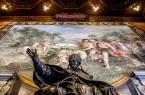
Of particular interest is the burial chamber discovered in 1953, decorated with frescoes from the 2nd-3rd century AD, now preserved at the Porta San Paolo Museum and faithfully reproduced at the site. The paintings depict Prometheus shaping man with Athena breathing life into him, flanked by a peacock and a pheasant, images that evoke the themes of regeneration and the immortality of the soul.
The Burial ground of via Ostiense is one of the most important remnants of the necropolis that extended along the ancient via Ostiense, the main connection between Rome and Ostia. Located today in Schuster Park, next to the Basilica of Saint Paul Outside the Walls, it represents the only significantly preserved section of the vast funerary area. The necropolis, used from the 1st century BC to the 3rd century AD, extended between the Rupe di San Paolo and the Tiber River; around these burials arose the first place of worship dedicated to the Apostle Paul, which gave rise to the early Christian basilica. Although much of the necropolis remains buried, excavations have yielded significant archaeological evidence.
Among the funerary typologies, columbaria predominate, structures designed to house cinerary urns, characterized by niches arranged on multiple levels and decorated with frescoes, stuccoes, and mosaics. Later, chamber tombs, sarcophagi, and pit burials also became widespread. Funerary inscriptions indicate that the necropolis housed primarily members of the middle and lower classes, including imperial freedmen, soldiers, and individuals from the Eastern Mediterranean.
Photo:Press release
 Condividi