

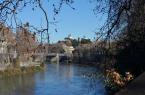






















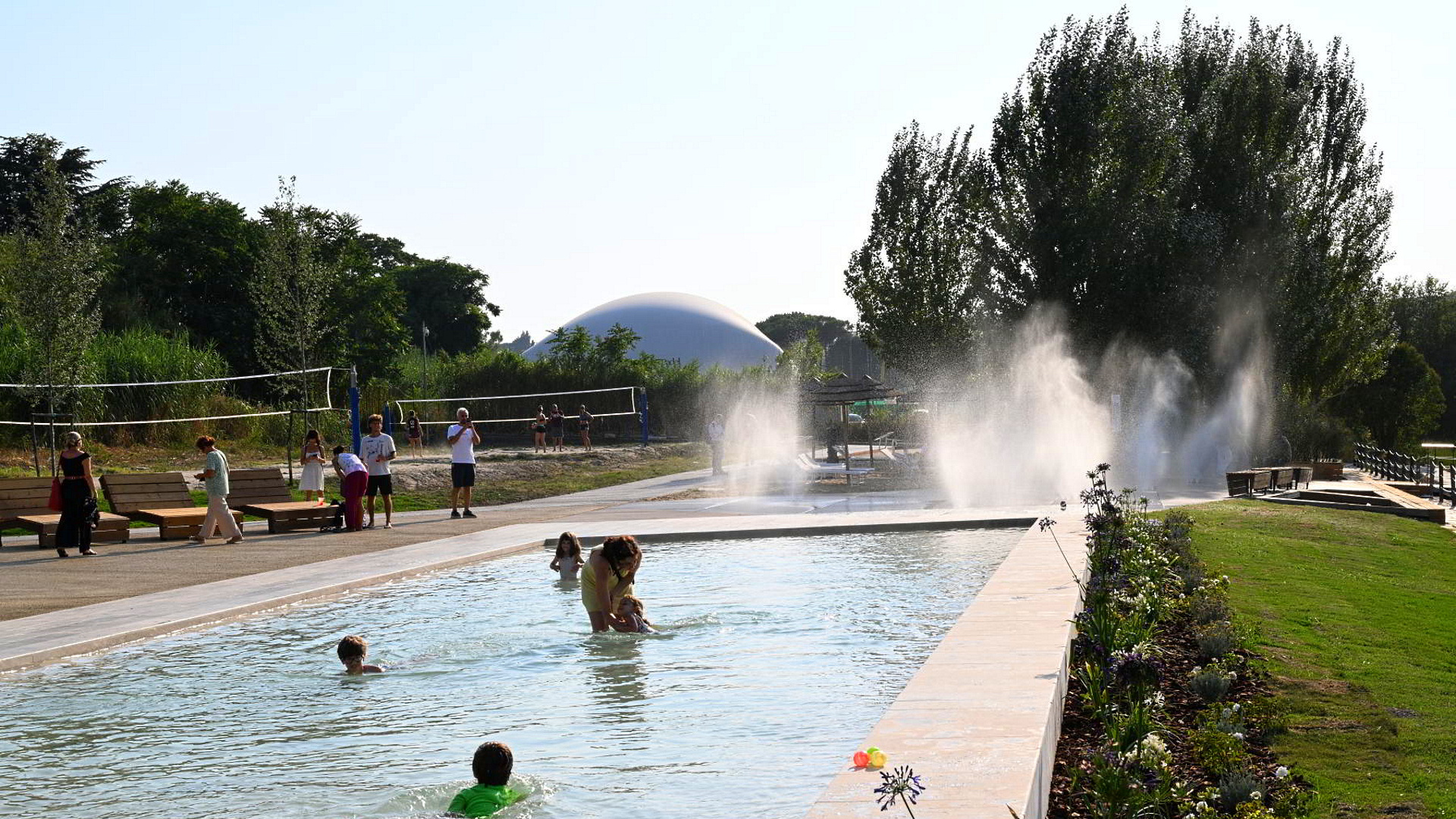
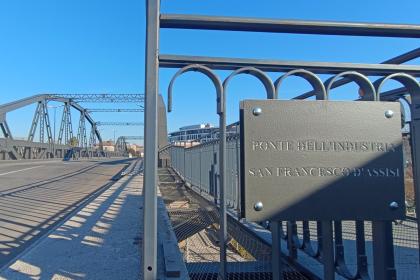
Overlooking the left bank of the River Tiber, this 1.9-hectare site is now one of the most significant urban regeneration projects dedicated to reconnecting Rome with its river. First introduced in 2018 as a seasonal summer riverside beach, the park preserves a remarkable historical and natural heritage, thanks to the remains of the Villa di Pietra Papa, the Basilica of St Paul Outside the Walls, and the Marconi Bridge, as well as a picturesque riverside promenade linking the embarkation point for Ostia Antica with the Ponte di Ferro (Iron Bridge).
Following the completion of an extensive environmental regeneration programme in July 2026, Tiberis has been transformed into a year-round urban park – a welcoming destination for community life, wellbeing and recreation that has restored the River Tiber to the heart of the city while creating an ideal setting for cultural events, live performances, open-air cinema and a wide range of public activities.
As part of the project, invasive vegetation was removed from more than 11,400 square metres of land. A total of 101 new trees – including Judas trees, ash, European hackberry and plane trees – were planted alongside 1,430 shrubs, 630 wetland and aquatic plants, and the restoration of around 5,400 square metres of lawn, helping to encourage the renaturalisation of the Tiber's riverbanks. The historic tamarisk grove has also been revived, complemented by an attractive water garden featuring ten pools planted with a variety of aquatic species. The entire planting scheme was developed with scientific support from Roma Tre University, ensuring both the project's quality and environmental sustainability.
The park's most distinctive feature is undoubtedly the Water Square, a 30-by-9-metre installation with a depth of 40 centimetres, inspired by the tradition of ancient Roman water squares. During the summer it becomes a shallow reflective pool, offering visitors a refreshing place to cool off on hot days. In winter, it is transformed into a striking open-air amphitheatre designed to host events, performances and public gatherings.
The park's internal pathways have also been completely redesigned using permeable paving, allowing rainwater to filter naturally into the ground while improving the site's overall environmental performance. Complementing these pathways is a 200-square-metre engineered timber platform equipped with interactive water features, supplied by recovering and recirculating water from Rome's traditional "nasoni" public fountains, providing an efficient and sustainable way to reduce summer heat.
Another important feature is the park's phytoremediation system, designed to treat overflow water from storage tanks and runoff from the bridge, using plant species such as Arundo donax and Sambucus nigra, harnessing the natural filtering properties of vegetation.
The site's two beach volleyball courts have also been completely refurbished, providing modern facilities for outdoor sport and recreation.
During the regeneration works, significant archaeological discoveries were made, including the foundations of a Roman-era building. The conservation and study of these remains inevitably extended the construction timetable, while further enhancing the site's historical significance.
Rounding off the facilities at the new park are a cosy relaxation area equipped with sun loungers, parasols and showers, a fenced-off dog area, toilets and a kiosk with a shaded refreshment area.
Photo: Tiberis Riverside Park © Roma Capitale
I Nasoni (Les Grands Nez), les petites fontaines de Rome
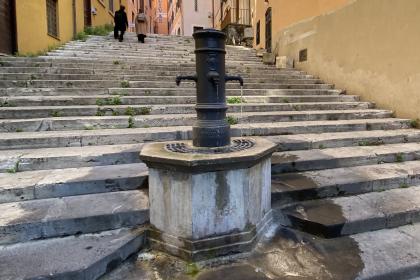
Le caratteristiche fontanelle installate in tante piazze e vie della città
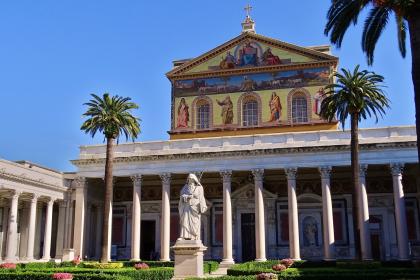
Basilique de Saint-Paul-Hors-les-Murs
 Condividi
Ponte dell'Industria
 Condividi
Informations
Aperto al pubblico dalle 8.00 alle 22.00
Condividi
Locations
Pour connaître tous les services d'accessibilité, visitez la section Rome accessible.