

















Pier Paolo Pasolini arrived in Rome with his mother Susanna on 28 January 1950, after leaving behind a trial for indecent behavior, dismissal from teaching in public schools and expulsion from the Communist Party. After a brief stay in the Ghetto, he moved with his mother and father, who had joined them in the meantime, to a suburb “with no landmarks but lime and filth” on the outskirts of the city, near the Rebibbia prison: a world that would inspire his literary and cinematographic creations for several years.
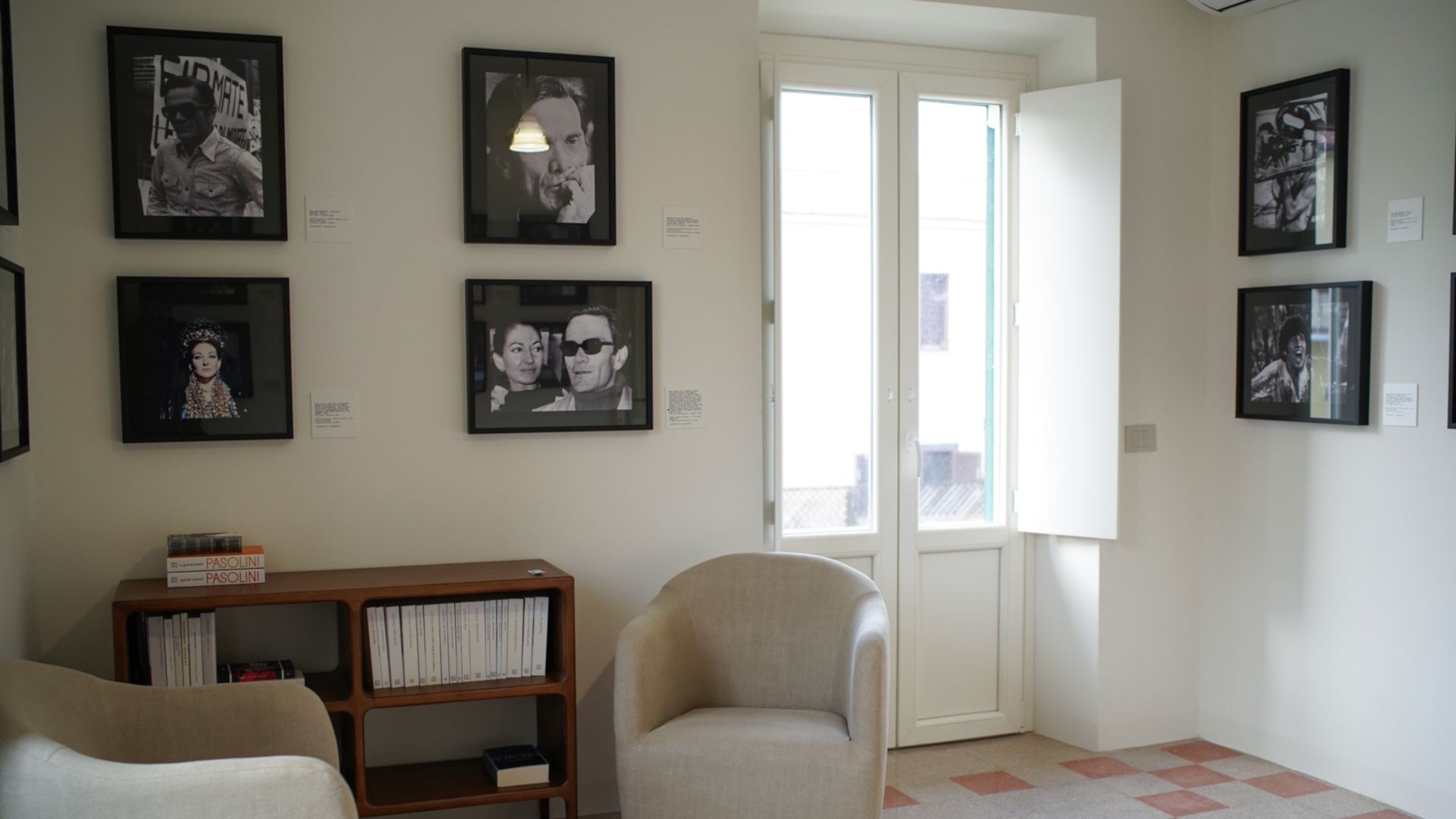
He remained in this part of the city from 1951 to 1954. While teaching at a private school in Ciampino, within the walls of his small flat (two bedrooms, a bathroom and a kitchen) on the first floor of a low building in Via Giovanni Tagliere, he began writing his first novel, Ragazzi di vita, and his collection of poems, Le ceneri di Gramsci. The flat was purchased in 2022 by film and television producer Pietro Valsecchi and then donated to the state. Thanks to a major restoration project promoted by the General Directorate of Museums and the Pantheon and Castel Sant’Angelo Institute - Directorate of National Museums of the City of Rome, the original finishes and furnishings were restored and a thematic library was established, which is set to grow progressively.
Open to the public as a house museum (with free admission) on the fiftieth anniversary of the tragic death of the Friulian poet and director (2 November 1975), Casa Pasolini is now a cultural center for and by the suburbs, as well as a space for promoting creativity. The program involves the IV Town Hall and the Passo Civico committee, with educational visits, cultural initiatives and activities designed in dialogue with the local area. Reservations are available on the Musei Italiani app.
Photo Direzione Musei statali della città di Roma - Ministero della Cultura
Informaciones
Giovedì e venerdì ore 9.00 - 14.00Sabato e domenica ore 10.00 - 18.00Chiuso lunedì, martedì e mercoledìChiuso il 25 dicembre (salvo aperture straordinarie su progetto MiC)
 Condividi
Location
Para conocer todos los servicios de accesibilidad, visite la sección Roma accesible.