


























The so-called Temple of Minerva Medica is located in the Esquilino district, in Via Giolitti, next to the Rome-Pantano urban railway line.
It was so named in the 16th century, when a statue of Minerva with the snake was found, erroneously attributed to the building in via Giolitti, actually found in Campo Marzio.
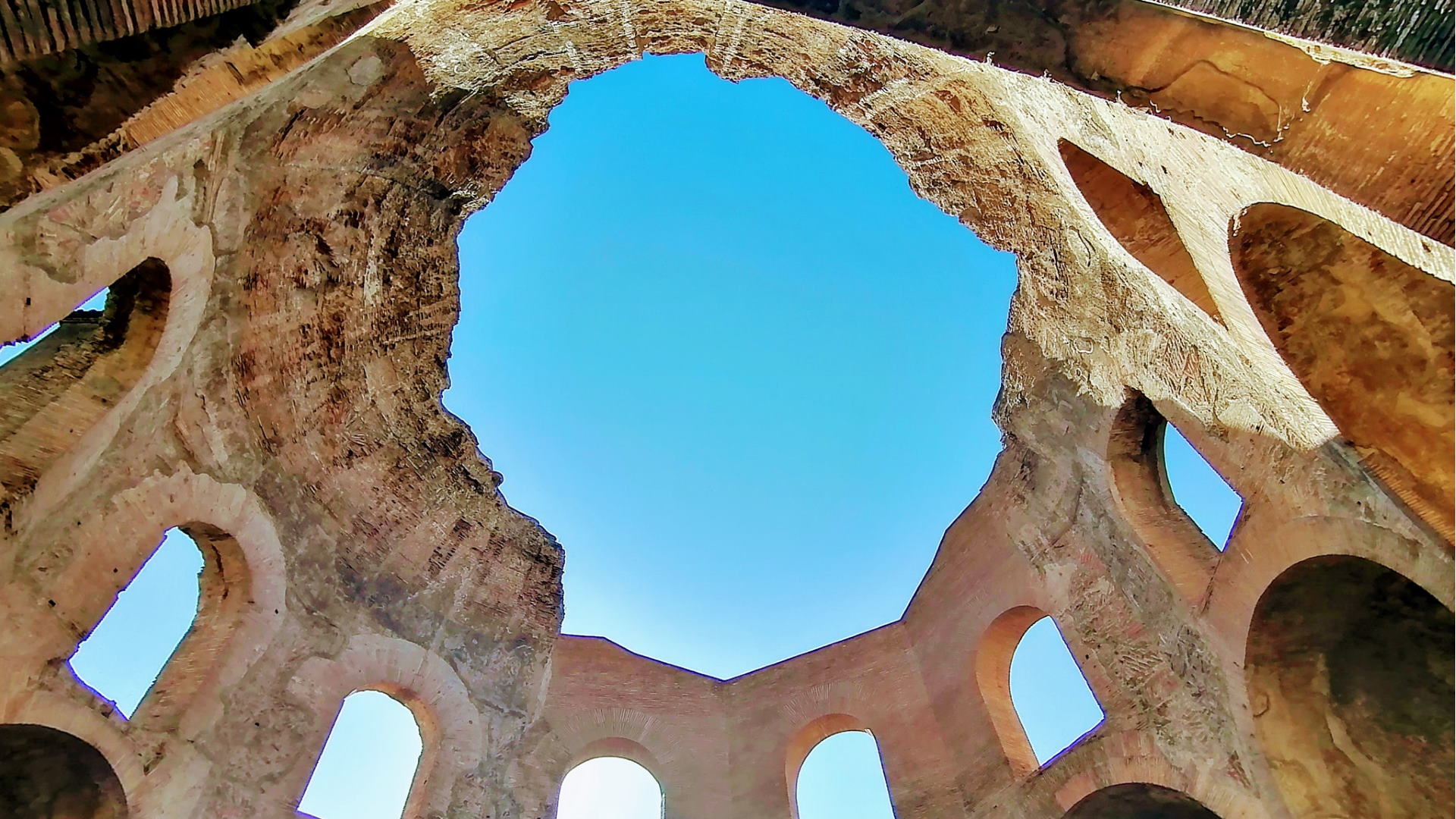
It is a large imperial brick building dating back to the early decades of the fourth century AD, consisting of a covered domed hall with a twelve-sided plan, on each of which, except the entrance, there are semicircular niches. Ten large windows open on the walls of the room.
The building that had a dome of about 25 meters in diameter, the third largest in ancient Rome, after that of the Pantheon and the Baths of Caracalla, was probably a representative pavilion or a nymphaeum (monumental fountain) that was part of the complex degli Horti Liciniani, a large villa that takes its name from the emperor Licinius Gallienus (260-268 AD).
The construction represents the development that took place in Roman architecture in the context of buildings with a central plan, which anticipates forms and aspects of Paleobyzantine architecture.
Photo credits: Courtesy of Soprintendenza Speciale Roma
Murallas Servianas

 Condividi
Museo Nacional Romano del Palacio Máximo
 Condividi
Informaciones
Consult the Official Website.
Condividi
Location
Para conocer todos los servicios de accesibilidad, visite la sección Roma accesible.